

Environment - Mar 25
UCalgary expedition, with NASA, Canadian and European space agencies, sets out to better understand state of Arctic ice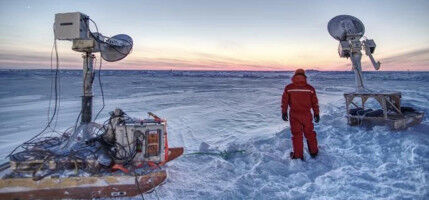
UCalgary expedition, with NASA, Canadian and European space agencies, sets out to better understand state of Arctic ice
Social Sciences - Today
Young people's wellbeing is improving in Greater Manchester, major survey finds
Young people's wellbeing is improving in Greater Manchester, major survey finds

Environment - Today
Australia's environment is improving but climate change is 'accelerating' damage to ecosystems and wildlife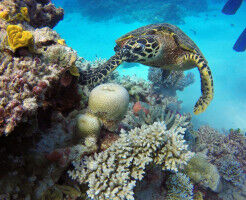
Australia's environment is improving but climate change is 'accelerating' damage to ecosystems and wildlife

Psychology - Mar 23
The grief myth: it doesn't come in stages or follow a checklist - like love, it endures
The grief myth: it doesn't come in stages or follow a checklist - like love, it endures


History & Archeology - Mar 23
The UV has played a part in the discovery of a 3,500-year-old loom that sheds light on key aspects of the Bronze Age textile revolution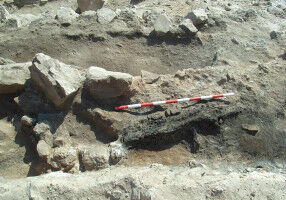
The UV has played a part in the discovery of a 3,500-year-old loom that sheds light on key aspects of the Bronze Age textile revolution
Innovation - Mar 23
The University of Valencia launches ClioViz, an open digital platform for accessing cultural heritage data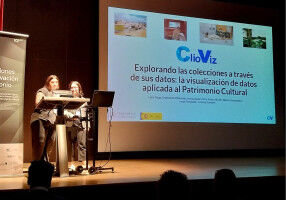
The University of Valencia launches ClioViz, an open digital platform for accessing cultural heritage data

Social Sciences - Mar 23
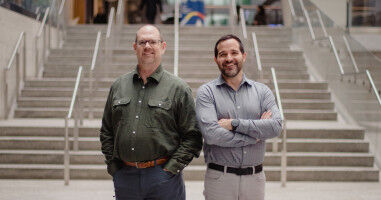
Study links higher concentration of pokie machines to increase in family and domestic violence
Study links higher concentration of pokie machines to increase in family and domestic violence
Health - Mar 23
Screening blitz could achieve cervical cancer elimination among Indigenous communities within a generation
Screening blitz could achieve cervical cancer elimination among Indigenous communities within a generation

Computer Science - Mar 20
New computer chip material inspired by the human brain could slash AI energy use
New computer chip material inspired by the human brain could slash AI energy use
news
University College London
Results 1661 - 1680 of 2143.
Health - 01.12.2016
HIV patients showing signs of multidrug resistance in Africa
Significant numbers of patients whose HIV strains developed resistance to older generation drugs are also resistant to modern drugs, finds a new study led by UCL and funded by Wellcome. The research, co-authored by researchers at the London School of Hygiene and Tropical Medicine and published in The Lancet Infectious Diseases , studied 712 HIV patients across the world whose HIV was not controlled by antiretrovirals.
Computer Science - 16.11.2016
Most updates to mobile apps don’t make a noticeable difference
The majority of updates to mobile apps don't have a significant impact on user ratings, suggesting developers might release updates too frequently, according to a new study by UCL researchers. They found free apps were less likely to make an impact when their developers release an update compared to paid apps, although among the impactful releases, the impact was more likely to be positive for free apps.
Life Sciences - 14.11.2016
Pain sensors specialised for specific sensations
Many pain-sensing nerves in the body are thought to respond to all types of 'painful events', but new UCL research in mice reveals that in fact most are specialised to respond to specific types such as heat, cold or mechanical pain. The study found that over 85% of pain-sensing neurons in whole organisms are sensitive to one specific type of painful stimulus.
Agronomy & Food Science - Health - 11.11.2016
Skipping breakfast and not enough sleep can make children overweight
Mothers smoking in pregnancy, children skipping breakfast and not having a regular bedtime or sufficient sleep all appear to be important factors in predicting whether a child will become overweight or obese, according to new research led by UCL. All three are early life factors which can be modified and the research highlights the possibility that prompt intervention could have an impact in curbing the growth in childhood overweight and obesity.
Life Sciences - Health - 08.11.2016
Blood vessels control brain growth
Blood vessels play a vital role in stem cell reproduction, enabling the brain to grow and develop in the womb, reveals new UCL research in mice. The study, published in the Proceedings of the National Academy of Sciences and funded by Wellcome, shows that blood vessels can increase the number of neural stem cells inside a living organism.
Life Sciences - 07.11.2016
Older dogs better at learning new tricks
Older adolescents and adults can learn certain thinking skills including non-verbal reasoning more effectively than younger people, finds new UCL research. The study, published in Psychological Science, also highlights the fact that non-verbal reasoning skills can be readily trained and do not represent an innate, fixed ability.
Life Sciences - Health - 27.10.2016
Top ten universities conduct a third of all UK animal research
The ten UK universities who do the most world-leading biomedical research have announced their animal research statistics, revealing that they collectively conducted a third of all UK animal research in 2015. The top ten institutions conduct more than two thirds of all UK university animal research between them, completing a combined total of 1.37 million procedures.
Life Sciences - 25.10.2016
Arousal exerts an unconscious influence on what we see
A new study from UCL researchers finds that subtle, unconscious increases in arousal - indicated by a faster heartbeat and dilated pupils - shape our confidence for visual experiences. The study, published in eLife , investigated the effect of unconscious arousal on how confident participants felt about what they were seeing when completing a simple task.
Health - 24.10.2016
‘Middle England’ faces lowest psychosis risk
The risk of developing a psychotic disorder such as schizophrenia is highest for young people, men, ethnic minorities and people living in urban areas and poorer neighbourhoods, finds a new study by UCL and the University of Cambridge. The research, funded by Wellcome and published in the American Journal of Psychiatry, suggests that a reduced risk of developing psychosis can be added to the list of social, economic and health advantages enjoyed by more affluent, older white British people living in rural England; a group typically known as 'Middle England'.
Law - Computer Science - 24.10.2016
AI predicts outcomes of human rights trials
The judicial decisions of the European Court of Human Rights (ECtHR) have been predicted to 79% accuracy using an artificial intelligence (AI) method developed by researchers at UCL, the University of Sheffield and the University of Pennsylvania. The method is the first to predict the outcomes of a major international court by automatically analysing case text using a machine learning algorithm.
Health - 18.10.2016
‘Some is good, more is better’: Regular exercise can cut your diabetes risk
Walking briskly or cycling for the recommended 150 minutes a week can reduce a person's risk of developing type 2 diabetes by up to 26%, according to new research by UCL. People who carry out an hour of moderate to vigorous exercise every day can reduce their risk of getting type 2 diabetes by 40%. The study also revealed that any amount of physical activity can reduce the risk of developing the disease.
Life Sciences - Pedagogy - 14.10.2016
Toddlers’ food fussiness is heavily influenced by genes
Toddlers' fussy eating habits are mainly the result of genetic influences rather than the result of poor parenting, according to new research led by scientists at UCL. The research, published in the Journal of Child Psychology and Psychiatry , investigated to what extent genes and environmental factors can explain why some children tend to refuse to try new foods or are very selective about what foods they eat.
Life Sciences - 13.10.2016
We sense ’stiffness’
Every day, people use their hands effortlessly to assess an object's stiffness, like the ripeness of a piece of fruit. For the first time an international team of scientists led by UCL, have discovered the area in the brain where stiffness perception is formed. The findings, published in the Journal of Neuroscience , could aid rehabilitation in patients with sensory impairments.
Physics - Astronomy & Space - 08.10.2016
Narrowing the window on sterile neutrinos
A major international collaboration between the MINOS experiment, which involves UCL scientists, and the Daya Bay experiment has today announced results which shed new light on one of the most pressing questions in particle physics - do sterile neutrinos exist? Sterile neutrinos are a suggested fourth neutrino alongside the well-known electron, muon and tau neutrinos.
Life Sciences - Earth Sciences - 23.09.2016
Study provides strongest evidence oxygen levels were key to early animal evolution
It has long puzzled scientists why, after 3 billion years of nothing more complex than algae, complex animals suddenly started to appear on Earth. Now, a team of researchers has put forward some of the strongest evidence yet to support the hypothesis that high levels of oxygen in the oceans were crucial for the emergence of skeletal animals 550 million years ago.
Astronomy & Space - Physics - 22.09.2016
Cosmology safe as universe has no sense of direction
The universe is expanding uniformly according to research led by UCL which reports that space isn't stretching in a preferred direction or spinning. The new study, published today in Physical Review Letters , studied the cosmic microwave background (CMB) which is the remnant radiation from the Big Bang.
Health - Administration - 14.09.2016
E-cigarettes may have helped 18,000 people quit smoking in 2015
E-cigarettes may have helped about 18,000 people in England to give up smoking in 2015, according to new research by UCL which was published in the British Medical Journal . Researchers at the UCL Health Behaviour Research Centre analysed data from the Smoking Toolkit study - which provides the latest information on smoking and smoking cessation in England - and data on the percentage of the smokers who set a quit date with Stop Smoking Services.
Life Sciences - Health - 12.09.2016
Ionising radiation damages DNA and causes cancer
For the first time, a team including UCL researchers has identified in human cancers two characteristic patterns of DNA damage caused by ionising radiation. These fingerprint patterns may now enable doctors to identify which tumours have been caused by radiation, and investigate if they should be treated differently.
Health - Life Sciences - 02.09.2016
Cannabis reduces short-term motivation to work for money
Smoking the equivalent of a single 'spliff' of cannabis makes people less willing to work for money while 'high', finds a new UCL study. The research, published in Psychopharmacology, is the first to reliably demonstrate the short-term effects of cannabis on motivation in humans. The researchers also tested motivation in people who were addicted to cannabis but not high during the test, and found that their motivation levels were no different to volunteers in the control group.
Life Sciences - Health - 01.09.2016
Key mechanism behind brain connectivity and memory revealed
Memory loss in mice has been successfully reversed following the discovery of new information about a key mechanism underlying the loss of nerve connectivity in the brain, say UCL researchers. Published today in Current Biology , The team found Wnt proteins play a key role in the maintenance of nerve connectivity in the adult brain and could become targets for new treatments that prevent and restore brain function in neurodegenerative diseases.


Environment - Mar 25
UCalgary expedition, with NASA, Canadian and European space agencies, sets out to better understand state of Arctic ice
UCalgary expedition, with NASA, Canadian and European space agencies, sets out to better understand state of Arctic ice
Social Sciences - Today
Young people's wellbeing is improving in Greater Manchester, major survey finds
Young people's wellbeing is improving in Greater Manchester, major survey finds
Environment - Today
Australia's environment is improving but climate change is 'accelerating' damage to ecosystems and wildlife
Australia's environment is improving but climate change is 'accelerating' damage to ecosystems and wildlife
Psychology - Mar 23
The grief myth: it doesn't come in stages or follow a checklist - like love, it endures
The grief myth: it doesn't come in stages or follow a checklist - like love, it endures
History & Archeology - Mar 23
The UV has played a part in the discovery of a 3,500-year-old loom that sheds light on key aspects of the Bronze Age textile revolution
The UV has played a part in the discovery of a 3,500-year-old loom that sheds light on key aspects of the Bronze Age textile revolution
Innovation - Mar 23
The University of Valencia launches ClioViz, an open digital platform for accessing cultural heritage data
The University of Valencia launches ClioViz, an open digital platform for accessing cultural heritage data
Social Sciences - Mar 23
Study links higher concentration of pokie machines to increase in family and domestic violence
Study links higher concentration of pokie machines to increase in family and domestic violence
Health - Mar 23
Screening blitz could achieve cervical cancer elimination among Indigenous communities within a generation
Screening blitz could achieve cervical cancer elimination among Indigenous communities within a generation
Computer Science - Mar 20
New computer chip material inspired by the human brain could slash AI energy use
New computer chip material inspired by the human brain could slash AI energy use