

Environment - Mar 25
UCalgary expedition, with NASA, Canadian and European space agencies, sets out to better understand state of Arctic ice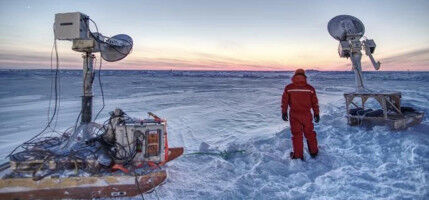
UCalgary expedition, with NASA, Canadian and European space agencies, sets out to better understand state of Arctic ice
Social Sciences - Today
Young people's wellbeing is improving in Greater Manchester, major survey finds
Young people's wellbeing is improving in Greater Manchester, major survey finds

Environment - Today
Australia's environment is improving but climate change is 'accelerating' damage to ecosystems and wildlife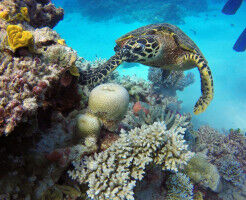
Australia's environment is improving but climate change is 'accelerating' damage to ecosystems and wildlife

Psychology - Mar 23
The grief myth: it doesn't come in stages or follow a checklist - like love, it endures
The grief myth: it doesn't come in stages or follow a checklist - like love, it endures


History & Archeology - Mar 23
The UV has played a part in the discovery of a 3,500-year-old loom that sheds light on key aspects of the Bronze Age textile revolution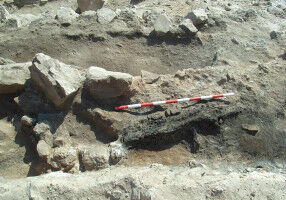
The UV has played a part in the discovery of a 3,500-year-old loom that sheds light on key aspects of the Bronze Age textile revolution
Innovation - Mar 23
The University of Valencia launches ClioViz, an open digital platform for accessing cultural heritage data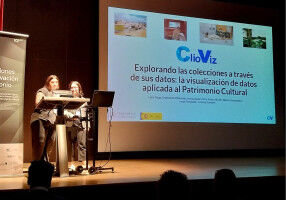
The University of Valencia launches ClioViz, an open digital platform for accessing cultural heritage data

Social Sciences - Mar 23
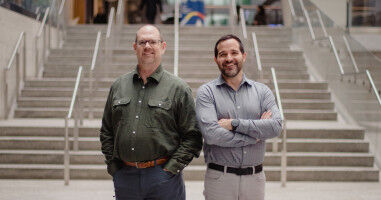
Study links higher concentration of pokie machines to increase in family and domestic violence
Study links higher concentration of pokie machines to increase in family and domestic violence
Health - Mar 23
Screening blitz could achieve cervical cancer elimination among Indigenous communities within a generation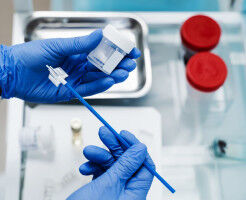
Screening blitz could achieve cervical cancer elimination among Indigenous communities within a generation
Computer Science - Mar 20
New computer chip material inspired by the human brain could slash AI energy use
New computer chip material inspired by the human brain could slash AI energy use
news
University College London
Results 1701 - 1720 of 2143.
Life Sciences - 05.05.2016
Time course of memory relocation revealed
The time-dependent role of the hippocampus in memory storage has been revealed through new research led by UCL and the Massachusetts Institute of Technology (MIT). The paper, published in PLOS ONE , investigated the dynamic nature of memory storage in the brain - studying the role of the hippocampus in the storage of contextual memories in rodents.
Health - Economics - 03.05.2016
Is hair the root to understanding our stress levels?
Women with lower incomes have higher concentrations of the stress hormone cortisol in their hair, according to a new study from UCL. The study also found that women whose income has gone up over the last 4 years have lower cortisol levels than those whose income went down, suggesting an association between long-term financial strain and stress hormones.
Life Sciences - Health - 26.04.2016
Meaning of brain scans for ’pain’ called into question
Patterns of brain activity thought to show pain responses have been called into question after researchers from UCL and the University of Reading saw such patterns in rare patients born without a sense of pain. The study, published in JAMA Neurology and funded by the Medical Research Council and European Commission, was designed to test the 'pain matrix'.
Astronomy & Space - 26.04.2016
Mars’ surface revealed in unprecedented detail
The surface of Mars - including the location of Beagle-2 - has been shown in unprecedented detail by UCL scientists using a revolutionary image stacking and matching technique. Exciting pictures of the Beagle-2 lander, the ancient lakebeds discovered by NASA's Curiosity rover, NASA's MER-A rover tracks and Home Plate's rocks have been released by the UCL researchers who stacked and matched images taken from orbit, to reveal objects at a resolution up to five times greater than previously achieved.
Life Sciences - Health - 18.04.2016
Brain caught ’filing’ memories during rest
Memories formed in one part of the brain are replayed and transferred to a different area of the brain during rest, according to a new UCL study in rats. The finding suggests that replay of previous experiences during rest is important for memory consolidation, a process whereby the brain stabilises and preserves memories for quick recall in the future.
Life Sciences - Health - 15.04.2016
Rescuing human light-sensors in childhood blindness
Scientists at the UCL Institute of Ophthalmology have identified the mechanism behind a common inherited cause of severe sight loss in young children. The results also point to a potential new treatment that may be possible to deliver by simple injection to the eye. Leber congenital amaurosis (LCA) is the name for a group of disorders that make up 5% of all inherited retinal dystrophies.
Environment - 14.04.2016
Biggest library of bat sounds compiled
The biggest library of bat sounds has been compiled to identify bats from their calls in Mexico - a country which harbours many of the Earth's species and has one of the highest rates of extinction and habitat loss. An international team led by scientists from UCL, University of Cambridge and the Zoological Society of London (ZSL), developed the reference call library and a new way of classifying calls to accurately and quickly identify and differentiate between bat species.
Health - Life Sciences - 07.04.2016
Fruit flies live longer on lithium
Fruit flies live 16% longer than average when given low doses of the mood stabiliser lithium, according to a UCL-led study. How lithium stabilises mood is poorly understood but when the scientists investigated how it prolongs the lives of flies, they discovered a new drug target that could slow ageing - a molecule called glycogen synthase kinase-3 (GSK-3).
Health - Life Sciences - 31.03.2016
Cancer drug could treat blood vessel deformities
A drug currently being trialled in cancer patients could also be used to treat an often incurable condition that can cause painful blood vessel overgrowths inside the skin, finds new research in mice led by UCL, Memorial Sloan Kettering (MSK) Cancer Center in New York and the Bellvitge Biomedical Research Institute (IDIBELL) in Barcelona.
Health - Mathematics - 29.03.2016
Uncertainty can cause more stress than inevitable pain
Knowing that there is a small chance of getting a painful electric shock can lead to significantly more stress than knowing that you will definitely be shocked, finds a new UCL study funded by the Medical Research Council (MRC). The study found that situations in which subjects had a 50% chance of receiving a shock were the most stressful while 0% and 100% chances were the least stressful.
Health - Life Sciences - 24.03.2016
New drug shows promise against muscle wasting disease
A new drug to treat the muscle wasting disease inclusion body myositis (IBM) reverses key symptoms in mice and is safe and well-tolerated in patients, finds a new study led by the Medical Research Council (MRC) Centre for Neuromuscular Diseases at UCL and the University of Kansas Medical Center. The study found that the new drug Arimoclomol reversed the disease's effects at the cellular level and improved muscle strength in mice.
Astronomy & Space - Physics - 23.03.2016
Solar storms trigger Jupiter’s ’Northern Lights’
Solar storms trigger Jupiter's intense 'Northern Lights' by generating a new X-ray aurora that is eight times brighter than normal and hundreds of times more energetic than Earth's aurora borealis, finds new UCL-led research using NASA's Chandra X-Ray Observatory. It is the first time that Jupiter's X-ray aurora has been studied when a giant storm from the Sun has arrived at the planet.
Psychology - Health - 16.03.2016
Risk of schizophrenia and other psychoses three times higher in refugees
A study of 1.3 million people in Sweden found that the risk of being diagnosed with schizophrenia or other psychoses was three times higher in refugees than in the Swedish-born population. The research team, from the Karolinska Institutet and UCL, found that more than one in a thousand refugees were diagnosed with schizophrenia or other psychoses every year.
Life Sciences - Health - 10.03.2016
Grid cells’ role in human imagination revealed
Evidence of grid cell activity has been seen in healthy volunteers asked to imagine moving through an environment in new UCL research funded by the Medical Research Council and the Wellcome Trust. The study, published in Current Biology, used fMRI scans to detect brain activity consistent with grid cell activity in the entorhinal cortex, an important 'hub' for navigation and memory.
Religions - Social Sciences - 10.03.2016
American devotion to religion is waning, according to new study
Religion in the United States is declining and mirroring patterns found across the western world, according to new research from UCL and Duke University in the United States. The study published in the American Journal of Sociology shows a drop in the number of Americans who claim religious affiliations, attend church regularly and believe in God.
Health - 09.03.2016
Gradual increase in antidepressant use among children and adolescents
A new study from a group of international researchers including Dr Irene Petersen and Dr Linda Wijlaars (UCL Department of Primary Care and Population Health and Institute of Child Health) found that there has been a gradual increase in antidepressant use among children and adolescents in Denmark, Germany, the Netherlands, the United Kingdom and the United States between 2005 and 2012.
Health - 09.03.2016
Why the body’s immune cells cause so much damage
The reason why the body's immune cells cause so much damage and can't regulate themselves in patients with lupus has been revealed in a UCL study published in the journal Immunity, a finding which could lead to more effective ways of treating lupus. Using blood samples from 88 healthy people and 217 lupus patients, the team found that immune cells, which regulate the immune response and reduce inflammation, are instead being turned into autoantibody-producing B cells that cause inflammation.
Environment - Health - 09.03.2016
Understanding the dynamics of crowd behaviour
Crowds of tiny particles disperse as their environment becomes more disordered, according to scientists from UCL, Bilkent University and Université Pierre et Marie Curie. The new mechanism is counterintuitive and might help describe crowd behaviour in natural, real-world systems where many factors impact on individuals' responses to either gather or disperse.
Life Sciences - 01.03.2016
First gene for grey hair found
The first gene identified for greying hair has been discovered by an international UCL-led study, confirming greying has a genetic component and is not just environmental. , the study analysed a population of over 6,000 people with varied ancestry across Latin America to identify new genes associated with hair colour, greying, density and shape, i.e. straight or curly.
Environment - Administration - 01.03.2016
Climate change adaptation spending in cities protects "wealth not people"
Developed cities are spending significantly more than developing cities on measures to adapt to the impacts of climate change - with spending seemingly linked to wealth rather than number of vulnerable people - finds UCL research. The paper, published today , analysed the amount that ten megacities (cities with a population greater than three million, or GDP ranking amongst the top 25 of cities, or both) across the globe spent on climate adaptation measures, such as better drainage systems, coastal defences and more resilient infrastructure.


Environment - Mar 25
UCalgary expedition, with NASA, Canadian and European space agencies, sets out to better understand state of Arctic ice
UCalgary expedition, with NASA, Canadian and European space agencies, sets out to better understand state of Arctic ice
Social Sciences - Today
Young people's wellbeing is improving in Greater Manchester, major survey finds
Young people's wellbeing is improving in Greater Manchester, major survey finds
Environment - Today
Australia's environment is improving but climate change is 'accelerating' damage to ecosystems and wildlife
Australia's environment is improving but climate change is 'accelerating' damage to ecosystems and wildlife
Psychology - Mar 23
The grief myth: it doesn't come in stages or follow a checklist - like love, it endures
The grief myth: it doesn't come in stages or follow a checklist - like love, it endures
History & Archeology - Mar 23
The UV has played a part in the discovery of a 3,500-year-old loom that sheds light on key aspects of the Bronze Age textile revolution
The UV has played a part in the discovery of a 3,500-year-old loom that sheds light on key aspects of the Bronze Age textile revolution
Innovation - Mar 23
The University of Valencia launches ClioViz, an open digital platform for accessing cultural heritage data
The University of Valencia launches ClioViz, an open digital platform for accessing cultural heritage data
Social Sciences - Mar 23
Study links higher concentration of pokie machines to increase in family and domestic violence
Study links higher concentration of pokie machines to increase in family and domestic violence
Health - Mar 23
Screening blitz could achieve cervical cancer elimination among Indigenous communities within a generation
Screening blitz could achieve cervical cancer elimination among Indigenous communities within a generation
Computer Science - Mar 20
New computer chip material inspired by the human brain could slash AI energy use
New computer chip material inspired by the human brain could slash AI energy use