

Environment - Mar 25
UCalgary expedition, with NASA, Canadian and European space agencies, sets out to better understand state of Arctic ice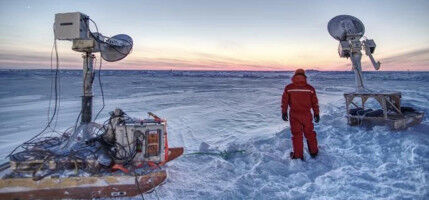
UCalgary expedition, with NASA, Canadian and European space agencies, sets out to better understand state of Arctic ice
Social Sciences - Today
Young people's wellbeing is improving in Greater Manchester, major survey finds
Young people's wellbeing is improving in Greater Manchester, major survey finds

Environment - Today
Australia's environment is improving but climate change is 'accelerating' damage to ecosystems and wildlife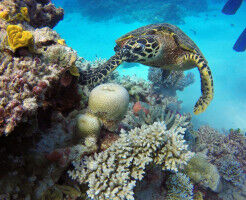
Australia's environment is improving but climate change is 'accelerating' damage to ecosystems and wildlife

Psychology - Mar 23
The grief myth: it doesn't come in stages or follow a checklist - like love, it endures
The grief myth: it doesn't come in stages or follow a checklist - like love, it endures

History & Archeology - Mar 23
The UV has played a part in the discovery of a 3,500-year-old loom that sheds light on key aspects of the Bronze Age textile revolution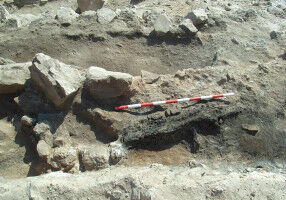
The UV has played a part in the discovery of a 3,500-year-old loom that sheds light on key aspects of the Bronze Age textile revolution
Innovation - Mar 23
The University of Valencia launches ClioViz, an open digital platform for accessing cultural heritage data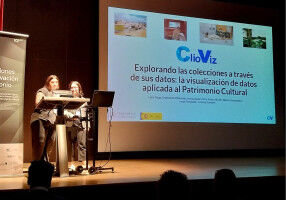
The University of Valencia launches ClioViz, an open digital platform for accessing cultural heritage data

Social Sciences - Mar 23
Study links higher concentration of pokie machines to increase in family and domestic violence
Study links higher concentration of pokie machines to increase in family and domestic violence
Health - Mar 23
Screening blitz could achieve cervical cancer elimination among Indigenous communities within a generation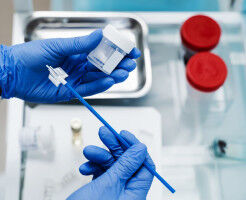
Screening blitz could achieve cervical cancer elimination among Indigenous communities within a generation
Computer Science - Mar 20
New computer chip material inspired by the human brain could slash AI energy use
New computer chip material inspired by the human brain could slash AI energy use
news
University College London
Results 1721 - 1740 of 2143.
Administration - 18.02.2016
Following orders makes us feel less responsible for our actions
Coercive instructions make people feel less responsible for the outcomes of their actions, as opposed to merely saying that they are less responsible, researchers from UCL and the Université Libre de Bruxelles in Belgium have found. Society holds individuals responsible for their own actions. However, individuals sometimes claim reduced responsibility because they were "only obeying orders".
Astronomy & Space - Physics - 16.02.2016
First detection of gases in super-Earth atmosphere
The first successful detection of gases in the atmosphere of a super-Earth reveals the presence of hydrogen and helium, but no water vapour, according to UCL researchers. The exotic exoplanet, 55 Cancri e, is over eight times the mass of Earth and has previously been dubbed the 'diamond planet' because models based on its mass and radius have led some astronomers to speculate that its interior is carbon-rich.
Health - 15.02.2016
Virtual reality therapy could help people with depression
An immersive virtual reality therapy could help people with depression to be less critical and more compassionate towards themselves, reducing depressive symptoms, finds a new study from UCL and ICREA-University of Barcelona. The therapy, previously tested by healthy volunteers, was used by 15 depression patients aged 23-61.
Life Sciences - Health - 11.02.2016
Blocking stress protein relieves chronic pain in mice
A group of drugs being developed to treat mood disorders could also relieve chronic pain, finds new UCL research funded by the Medical Research Council. The study reveals how a protein that shapes the body's response to stress also drives chronic pain and so offers new targets for future pain treatments.
Physics - Health - 08.02.2016
Understanding the physics of pancakes to save sight
Understanding the textures and patterns of pancakes is helping UCL scientists improve surgical methods for treating glaucoma. The appearance of pancakes depends on how water escapes the batter mix during the cooking process and this varies with the thickness of the batter, according to new UCL research.
Health - 29.01.2016
Resistance to key HIV drug ’concerningly common’
HIV drug resistance to tenofovir, an antiretroviral drug vital to most modern HIV treatment and prevention strategies, is surprisingly and worryingly common according to a large study led by UCL and funded by the Wellcome Trust. The research, co-authored by researchers at Stanford University and the London School of Hygiene and Tropical Medicine and published in the Lancet Infectious Diseases journal, studied 1,926 HIV patients across the world with uncontrolled HIV despite being prescribed antiretrovirals.
Life Sciences - Health - 28.01.2016
Estrogens alleviate hyperactivity in zebrafish with autism gene
Research led by UCL, Yale and University of California, San Francisco has shown that the hormone estrogen alleviates the sleep disruption experienced by zebrafish genetically designed to help understand the biology of autism spectrum disorder (ASD). The scientists set out to investigate the function of genes linked to autism and seizures in humans by using zebrafish as a model system.
Health - 28.01.2016
Antidepressants during pregnancy do not pose risk to unborn child
Women who take antidepressants during pregnancy do not appear to be at greater risk of giving birth to children with congenital heart defects compared to women who are not exposed to the drugs , according to new research from UCL. The study, which analysed data from over 200,000 pairs of women and children in the UK between 1990 and 2011, showed that other characteristics , including diabetes, a body mass index of more than 30 and a history of alcohol and drug use did pose a greater risk of having a baby with congenital heart problems.
Health - Life Sciences - 26.01.2016
Epilepsy drug could protect nerves from damage in MS
An epilepsy drug could lead to a new treatment that protects nerve damage in MS patients, according to research published in the Lancet Neurology. Researchers, led by Dr Raj Kapoor from the UCL Institute of Neurology, found the anti-convulsant drug phenytoin protected neural tissue in patients with optic neuritis.
Health - Computer Science - 22.01.2016
New test could predict dementia risk during routine GP visits
It may be possible to assess the risk of developing dementia by analyzing information gathered during routine visits to the family doctor, according to research published in the open access journal BMC Medicine. Researchers from UCL have developed an algorithm that uses routinely collected data to predict a five-year risk of dementia as part of an NIHR-funded study.
Environment - Social Sciences - 15.01.2016
First estimate of Pygmy population in Central Africa reveals their plight
The forests of Central Africa could be home to up to 920,000 Pygmies, according to researchers from UCL, Manchester Metropolitan University and the University of Malaga, who have conducted the first measured estimate of the population and distribution of these indigenous groups. Up until now it has not been possible to determine the numbers and actual geographic ranges of Pygmy communities, because of their location in remote forest areas, mobility, lack of census data, and imprecise and partial sources of information.
Life Sciences - Health - 11.01.2016
DNA ’building blocks’ pave the way for improved drug delivery
DNA has been used as a 'molecular building block' to construct synthetic bio-inspired pores which will improve the way drugs are delivered and help advance the field of synthetic biology, according to scientists from UCL and Nanion Technologies. The study, published today and funded by the Biotechnology and Biological Sciences Research Council (BBSRC), Leverhulme Trust and UCL Chemistry, shows how DNA can be used to build stable and predictable pores that have a defined shape and charge to control which molecules can pass through the pore and when.
Health - Life Sciences - 05.01.2016
Map shows hotspots for bat-human virus transmission risk
West Africa, sub-Saharan Africa and South East Asia are most at risk from bat viruses 'spilling over' into humans resulting in new emerging diseases, according to a new global map compiled by scientists at UCL, the Zoological Society of London (ZSL) and the University of Edinburgh. The map shows risk levels due to a variety of factors including large numbers of different bat viruses found locally, increasing population pressure, and hunting bats for bushmeat.
Health - 22.12.2015
Early chemotherapy improves survival for men with prostate cancer
Two papers from UCL show that having early chemotherapy improves survival for men with prostate cancer. The papers, published in the Lancet and Lancet Oncology , report the results from the STAMPEDE clinical trial and a meta-analysis. Both papers looked at the use of a chemotherapy drug called docetaxel.
Life Sciences - 18.12.2015
Life exploded on Earth after slow rise of oxygen
It took 100 million years for oxygen levels in the oceans and atmosphere to increase to the level that allowed the explosion of animal life on Earth about 600 million years ago, according to a UCL-led study funded by the Natural Environment Research Council. Before now it was not known how quickly Earth's oceans and atmosphere became oxygenated and if animal life expanded before or after oxygen levels rose.
Electroengineering - 18.12.2015
Real-time tracking shows how batteries degrade
How disposable Lithium batteries degrade during normal use has been tracked in real-time by a UCL-led team using sophisticated 3D imaging, giving a new way to non-invasively monitor performance loss and guide the development of more effective commercial battery designs. The team recently used the same technique to show how rechargeable Lithium-ion batteries fail when they are exposed to extreme levels of heat, but this is the first time the extent of day-to-day damage of disposable Lithium batteries has been shown.
Health - Social Sciences - 17.12.2015
Americans do not have better teeth than the English
Contrary to popular belief, the oral health of US citizens is not better than the English, finds a study in the Christmas issue of The BMJ. In addition, the research suggests there are consistently wider educational and income inequalities in oral health in the US compared with England. There is a popular belief in the US, dating back over a century, that the English have terrible teeth, much worse than Americans.
Pedagogy - Health - 17.12.2015
Parents need more guidance to prevent toddlers overeating
Reducing toddlers' portion sizes or number of eating occasions could potentially help to target weight gain in later life according to new research from UCL. It is the first study to look at how the appetitive traits of 'food responsiveness' (the urge to eat in response to the sight or smell of appetising food) and 'satiety responsiveness' (sensitivity to internal 'fullness' signals') relate to the eating behaviours of toddlers in an everyday context.
Health - Administration - 17.12.2015
First evidence to suggest that screening for ovarian cancer may save lives
New results from the world's biggest ovarian cancer screening trial led by UCL suggest that screening based on an annual blood test may help reduce the number of women dying from the disease by around 20%. The research, published today (Thursday) in the Lancet , also cautions that longer follow up is needed to establish more certain estimates of how many deaths from ovarian cancer could be prevented by screening.
Health - 15.12.2015
Distractibility trait predisposes some to attentional lapses
People vary according to different personality traits, such as extraversion or conscientiousness, and new UCL research suggests that they also vary according to a particular cognitive trait: distractibility. The findings are published in Psychological Science , a journal of the Association for Psychological Science.


Environment - Mar 25
UCalgary expedition, with NASA, Canadian and European space agencies, sets out to better understand state of Arctic ice
UCalgary expedition, with NASA, Canadian and European space agencies, sets out to better understand state of Arctic ice
Social Sciences - Today
Young people's wellbeing is improving in Greater Manchester, major survey finds
Young people's wellbeing is improving in Greater Manchester, major survey finds
Environment - Today
Australia's environment is improving but climate change is 'accelerating' damage to ecosystems and wildlife
Australia's environment is improving but climate change is 'accelerating' damage to ecosystems and wildlife
Psychology - Mar 23
The grief myth: it doesn't come in stages or follow a checklist - like love, it endures
The grief myth: it doesn't come in stages or follow a checklist - like love, it endures
History & Archeology - Mar 23
The UV has played a part in the discovery of a 3,500-year-old loom that sheds light on key aspects of the Bronze Age textile revolution
The UV has played a part in the discovery of a 3,500-year-old loom that sheds light on key aspects of the Bronze Age textile revolution
Innovation - Mar 23
The University of Valencia launches ClioViz, an open digital platform for accessing cultural heritage data
The University of Valencia launches ClioViz, an open digital platform for accessing cultural heritage data
Social Sciences - Mar 23
Study links higher concentration of pokie machines to increase in family and domestic violence
Study links higher concentration of pokie machines to increase in family and domestic violence
Health - Mar 23
Screening blitz could achieve cervical cancer elimination among Indigenous communities within a generation
Screening blitz could achieve cervical cancer elimination among Indigenous communities within a generation
Computer Science - Mar 20
New computer chip material inspired by the human brain could slash AI energy use
New computer chip material inspired by the human brain could slash AI energy use