

Health - Today
MedUni Vienna shows: By using their own voices, trainee doctors learn to better understand transgender perspectives
MedUni Vienna shows: By using their own voices, trainee doctors learn to better understand transgender perspectives





Art & Design - Mar 25
New special exhibition at the Josephinum is dedicated to Austria's exceptional artist Gustav Klimt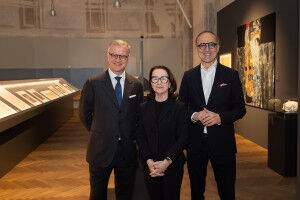
New special exhibition at the Josephinum is dedicated to Austria's exceptional artist Gustav Klimt
Health - Mar 25
University of Manchester supports landmark Russell Group commitment to build healthier communities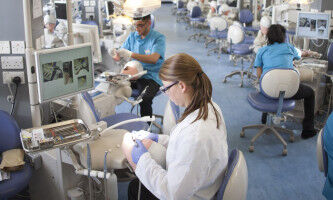
University of Manchester supports landmark Russell Group commitment to build healthier communities
Health - Mar 25
Cortical thickness, schizophrenia, and causality in psychiatry: when the trace is mistaken for the cause
Cortical thickness, schizophrenia, and causality in psychiatry: when the trace is mistaken for the cause
Career - Mar 25
Low-income students and girls are steered away from 'risky' creative careers at school
Low-income students and girls are steered away from 'risky' creative careers at school








news
University College London
Results 1741 - 1760 of 2145.
Health - Administration - 17.12.2015
First evidence to suggest that screening for ovarian cancer may save lives
New results from the world's biggest ovarian cancer screening trial led by UCL suggest that screening based on an annual blood test may help reduce the number of women dying from the disease by around 20%. The research, published today (Thursday) in the Lancet , also cautions that longer follow up is needed to establish more certain estimates of how many deaths from ovarian cancer could be prevented by screening.
Health - 15.12.2015
Distractibility trait predisposes some to attentional lapses
People vary according to different personality traits, such as extraversion or conscientiousness, and new UCL research suggests that they also vary according to a particular cognitive trait: distractibility. The findings are published in Psychological Science , a journal of the Association for Psychological Science.
Health - 10.12.2015
More than half of England’s poorest citizens risk undetected bowel cancer
The study was set up to test ways of narrowing the gap in uptake between rich and poor. The results highlight just how wide this gap currently is, and also provide the first published national figures on bowel screening uptake since the scheme was fully rolled out in 2010. Four randomised controlled trials were conducted across the whole of England to see if uptake could be increased, particularly among the most disadvantaged members of society, by making cheap, simple and easy-to-implement changes to the screening invitation letters and information materials.
Physics - Mathematics - 10.12.2015
Quantum physics problem proved unsolvable
A mathematical problem underlying fundamental questions in particle physics and quantum physics is provably unsolvable, according to scientists at UCL, Universidad Complutense de Madrid - ICMAT and Technische Universität München. The findings show that even a perfect and complete description of the microscopic properties of a material is not enough to predict its macroscopic behaviour.
Physics - 09.12.2015
Detecting and identifying explosives with single test
A new test for detecting multiple explosives simultaneously has been developed by UCL scientists. The proof-of-concept sensor is designed to quickly identify and quantify five commonly used explosives in solution to help track toxic contamination in waste water and improve the safety of public spaces.
Life Sciences - 09.12.2015
Why focusing on a visual task will make us deaf to our surroundings
Concentrating attention on a visual task can render you momentarily 'deaf' to sounds at normal levels, reports a new UCL study funded by the Wellcome Trust. The study, published in the Journal of Neuroscience, suggests that the senses of hearing and vision share a limited neural resource. Brain scans from 13 volunteers found that when they were engaged in a demanding visual task, the brain response to sound was significantly reduced.
Life Sciences - Health - 04.12.2015
GM mice reveal the secret to a painless life
People born with a rare genetic mutation are unable to feel pain, but previous attempts to recreate this effect with drugs have had surprisingly little success. Using mice modified to carry the same mutation, UCL researchers funded by the MRC and Wellcome Trust have now discovered the recipe for painlessness.
Health - Psychology - 02.12.2015
Study highlights burden of eating disorders in South London
A new study from UCL and King's College London has revealed that 7.5 per cent of adults in a South London sample could be diagnosed as having an eating disorder. The clinical criteria surrounding eating disorders recently changed with the introduction of the fifth and latest Diagnostic and Statistical Manual (DSM-5), the standard classification of mental disorders used by mental health professionals across the world.
Social Sciences - Life Sciences - 01.12.2015
Social media and drinks before bed are affecting teenagers’ school performances
Drinking caffeinated drinks and using social media 30 minutes before bedtime is significantly reducing sleep quantity in teenagers and negatively affecting their school performance, according to new research from UCL Institute of Education (IOE)'s Lifespan Learning and Sleep Laboratory. The role of environmental factors on sleep patterns and school performance in adolescents written by Dr Dagmara Dimitriou, Dr Frances Le Cornu Knight and Patrick Milton shows that the total sleep and bedtimes of teenagers on weekdays are strongly associated with poorer academic achievement at school.
Health - 19.11.2015
Poorer dementia patients in England less likely to be prescribed drugs
Dementia patients from more affluent areas in England are 27% more likely to be prescribed anti-dementia drugs than patients from poorer areas, finds a new UCL study of 77,045 dementia patients across the UK. This inequality was not seen in Scotland, Northern Ireland or Wales. The new research, published in Age and Ageing , also found that compared to English practices, anti-dementia drugs were prescribed more often in Northern Ireland and Scotland but less often in Wales.
Health - 10.11.2015
Changes in humour an early sign of dementia
Researchers at UCL have revealed that a change in sense of humour could be an early sign of dementia. The findings could help improve dementia diagnosis, by highlighting changes not commonly thought to be linked to the condition. The research team was particularly interested in how sense of humour can change in frontotemporal dementia (FTD) and Alzheimer's disease.
Health - Life Sciences - 05.11.2015
’Dickensian’ lung disease rates on the rise in UK pensioners
The number of people diagnosed with bronchiectasis, a lung condition thought to be a 'disease of the past', has risen considerably in the past decade and now affects more than 1% of UK pensioners, finds a new study by UCL, University College London Hospitals (UCLH) NHS Foundation Trust, Imperial College London and the London School of Hygiene and Tropical Medicine.
Health - 27.10.2015
Withdrawing dementia drug doubles risk of nursing home placement
Withdrawing a commonly-prescribed Alzheimer's disease drug from people in the advanced stages of the disease doubles their risk of being placed in a nursing home within a year, according to UCL research published today in The Lancet Neurology . Researchers funded by the Medical Research Council and Alzheimer's Society followed 295 people with moderate to severe Alzheimer's disease to monitor the effects of continuing or discontinuing the drug donepezil - which is typically withdrawn in the later stages of the disease because of a lack of perceived benefit by clinicians.
Health - 22.10.2015
New trial to find out whether aspirin fights cancer
A new trial launches today, which aims to answer once and for all whether or not a daily dose of aspirin can help prevent some cancers from coming back. Some previous studies have suggested it might, but the evidence has not been conclusive. Doctors need clear proof that it is a safe and effective treatment before prescribing it for their patients.
Health - Life Sciences - 14.10.2015
UCL and Takeda announce a new research partnership to identify novel therapeutic targets for neurodegenerative diseases
UCL and Takeda Pharmaceutical Company Limited today announced a new research collaboration to identify and validate novel target genes for the treatment of neurodegenerative disease. This collaboration will focus on mechanistic approaches for the identification of genes or signalling pathways that modify neurodegenerative disease processes affecting neuronal health (for example motor neurone disease (MND or ALS), Huntington's disease and Parkinson's disease).
Life Sciences - History & Archeology - 13.10.2015
Feeding Stonehenge: what was on the menu for Stonehenge’s builders, 2500 BC
Archaeologists from a consortium of universities including UCL have found out what people ate while building Stonehenge, by analysing the food residues preserved in their pots as well as the animal bones and other food waste from the large settlement of Durrington Walls near Stonehenge. Pork and beef were the prime foods, barbecued and boiled.
Life Sciences - Social Sciences - 08.10.2015
Our brain’s response to others’ good news depends on empathy
The way our brain responds to others' good fortune is linked to how empathetic people report themselves to be, according to new UCL-led research. The study, published today in the Journal of Neuroscience and funded by the Medical Research Council, shows that a part of the brain called the anterior cingulate cortex (ACC) seems particularly attuned to other people's good news, but how it responds varies substantially depending on our levels of empathy.
Religions - Health - 30.09.2015
Islamist insurgency strongly influences where polio occurs
Islamist insurgency has had a strong effect on where polio cases occur since 2011, potentially as a reaction to the use of counterinsurgency strategies, according to new research led by UCL. In research published today in the open access journal Globalization and Health, lead author Dr Jonathan Kennedy (UCL Political Science) and colleagues from the London School of Hygiene & Tropical Medicine and Cambridge University (Professor Lawrence King) analysed cross-national data for the period 2003-14.
Social Sciences - Sport - 10.09.2015
NFL fans and ESPN reporters overly optimistic about team prospects
US fans of the National Football League (NFL) and sports reporters assigned to specific teams have unrealistic expectations about how well their team will perform, finds new research from UCL and Oxford University. The study, published in PLOS ONE, also reveals which teams are most liked and disliked, as well as which teams have the most optimistic fans.
Health - Life Sciences - 10.09.2015
Possible evidence for human transmission of Alzheimer’s pathology
Amyloid beta pathology in the grey matter and blood vessel walls characteristic of Alzheimer's disease (AD) and the related cerebral amyloid angiopathy (CAA) is observed in the brains of deceased patients who acquired Creutzfeldt-Jakob disease (CJD) following treatment with prion-contaminated human growth hormone.


Health - Today
MedUni Vienna shows: By using their own voices, trainee doctors learn to better understand transgender perspectives
MedUni Vienna shows: By using their own voices, trainee doctors learn to better understand transgender perspectives
Art & Design - Mar 25
New special exhibition at the Josephinum is dedicated to Austria's exceptional artist Gustav Klimt
New special exhibition at the Josephinum is dedicated to Austria's exceptional artist Gustav Klimt
Health - Mar 25
University of Manchester supports landmark Russell Group commitment to build healthier communities
University of Manchester supports landmark Russell Group commitment to build healthier communities
Health - Mar 25
Cortical thickness, schizophrenia, and causality in psychiatry: when the trace is mistaken for the cause
Cortical thickness, schizophrenia, and causality in psychiatry: when the trace is mistaken for the cause
Career - Mar 25
Low-income students and girls are steered away from 'risky' creative careers at school
Low-income students and girls are steered away from 'risky' creative careers at school