

Environment - Mar 25
UCalgary expedition, with NASA, Canadian and European space agencies, sets out to better understand state of Arctic ice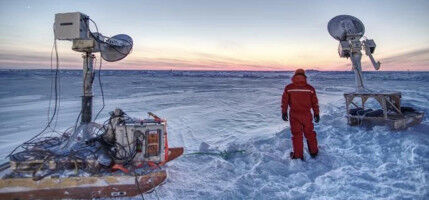
UCalgary expedition, with NASA, Canadian and European space agencies, sets out to better understand state of Arctic ice
Social Sciences - Today
Young people's wellbeing is improving in Greater Manchester, major survey finds
Young people's wellbeing is improving in Greater Manchester, major survey finds

Environment - Today
Australia's environment is improving but climate change is 'accelerating' damage to ecosystems and wildlife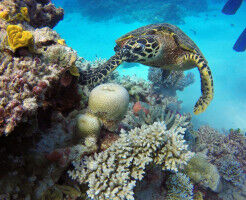
Australia's environment is improving but climate change is 'accelerating' damage to ecosystems and wildlife

Psychology - Mar 23
The grief myth: it doesn't come in stages or follow a checklist - like love, it endures
The grief myth: it doesn't come in stages or follow a checklist - like love, it endures


History & Archeology - Mar 23
The UV has played a part in the discovery of a 3,500-year-old loom that sheds light on key aspects of the Bronze Age textile revolution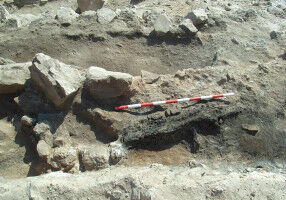
The UV has played a part in the discovery of a 3,500-year-old loom that sheds light on key aspects of the Bronze Age textile revolution
Innovation - Mar 23
The University of Valencia launches ClioViz, an open digital platform for accessing cultural heritage data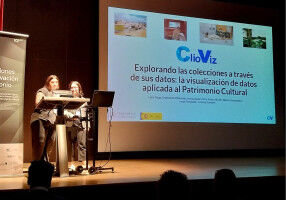
The University of Valencia launches ClioViz, an open digital platform for accessing cultural heritage data

Social Sciences - Mar 23
Study links higher concentration of pokie machines to increase in family and domestic violence
Study links higher concentration of pokie machines to increase in family and domestic violence
Health - Mar 23
Screening blitz could achieve cervical cancer elimination among Indigenous communities within a generation
Screening blitz could achieve cervical cancer elimination among Indigenous communities within a generation
Computer Science - Mar 20
New computer chip material inspired by the human brain could slash AI energy use
New computer chip material inspired by the human brain could slash AI energy use
news
University College London
Results 1781 - 1800 of 2143.
Health - Life Sciences - 27.03.2015
New role uncovered for ’oldest’ tumour suppressor gene
Scientists have revealed a brand new function for one of the first cancer genes ever discovered - the retinoblastoma gene - in a finding that could open up exciting new approaches to treatment. The retinoblastoma gene is so called because mutations to it cause a rare children's eye cancer of the same name, and is known to play a central role in stopping healthy cells from dividing uncontrollably.
Life Sciences - History & Archeology - 24.03.2015
Complex genetic ancestry of Americans uncovered
By comparing the genes of current-day North and South Americans with African and European populations, a new study has found the genetic fingerprints of the slave trade and colonisation that shaped migrations to the Americas hundreds of years ago. The team, from Oxford University, UCL and the Universita' del Sacro Cuore of Rome, analysed more than 4,000 previously collected DNA samples from 64 different populations, covering multiple locations in Europe, Africa and the Americas.
Agronomy & Food Science - Health - 24.03.2015
Weight discrimination has major impact on quality of life
Weight discrimination is linked to significantly lower quality of life, and accounts for approximately 40% of the negative psychological effects associated with obesity, finds new UCL research funded by Cancer Research UK. The study, which analysed data from 5,056 UK adults, found that those who felt discriminated against on the basis of their weight had a 70% increase in symptoms of depression, a 14% drop in quality of life and 12% lower life satisfaction relative to those who did not perceive weight discrimination.
Life Sciences - Health - 19.03.2015
Structure of genetic messenger molecules reveals key role in diseases
Messenger RNAs (mRNA) are linear molecules that contain instructions for producing the proteins that keep living cells functioning. A new study by UCL researchers has shown how the three-dimensional structures of mRNAs determine their stability and efficiency inside cells. This new knowledge could help to explain how seemingly minor mutations that alter mRNA structure might cause things to go wrong in neurodegenerative diseases like Alzheimer's.
Life Sciences - Health - 19.03.2015
The first fine-scale genetic map of the British Isles
Many people in the UK feel a strong sense of regional identity, and it now appears that there may be a scientific basis to this feeling, according to a landmark new study into the genetic makeup of the British Isles. An international team, led by researchers from the University of Oxford, UCL and the Murdoch Childrens Research Institute in Australia, used DNA samples collected from more than 2,000 people to create the first fine-scale genetic map of any country in the world.
Health - 06.03.2015
How drinking behaviour changes through the years
In the UK, frequent drinking becomes more common in middle to old age, especially amongst men, according to UCL research published in the open access journal, BMC Medicine. Doctors are seeing a growing number of cases of alcohol misuse among the elderly and this finding supports concerns that older people might be abusing alcohol.
Life Sciences - 05.03.2015
Computer reconstruction of human fossil sheds light on our origins
The fossil of Homo habilis , or 'handy man', has undergone state-of-the-art computer reconstruction, revealing new information about its jaw shape which indicates the species has older evolutionary roots than previously thought and shows that three different Homo species existed between 2.1 and 1.6 million years ago, according to UCL researchers who led the study.
Health - 25.02.2015
Pre-Exposure Prophylaxis is highly protective against HIV infection
Researchers from the Medical Research Council Clinical Trials Unit (MRC CTU) at UCL and Public Health England have presented results at a conference in Seattle, Washington, indicating that pre-exposure prophylaxis (PrEP) is highly protective against HIV for gay and other men who have sex with men in England.
Health - Economics - 16.02.2015
UCL to coordinate £16m project to crack difficult disease areas
UCL has successfully coordinated a £16 million bid to work with the Medical Research Council (MRC), GSK and four other universities to improve scientists' understanding of inflammatory and fibrotic diseases that present a serious burden to patients. The Experimental Medicine Initiative to Explore New Therapies (EMINENT) network will bring together teams of researchers from UCL, the Universities of Cambridge, Glasgow, Newcastle and Imperial College London, with GSK researchers to study the fundamental biological mechanisms responsible for a range of inflammatory and fibrotic diseases.
Health - 05.02.2015
New biomarkers to spot pancreatic cancer early
Pancreatic cancer could be diagnosed up to two years earlier by screening for two tumour markers found in blood, according to research published in Clinical Cancer Research. The study, conducted by researchers from UCL, UCL Hospital Foundation Trust and the University of Liverpool, suggests that these biomarkers could be used as an early screening tool for those at high risk of pancreatic cancer.
Electroengineering - 03.02.2015
New technique doubles the distance of optical fibre communications
A new way to process fibre optic signals has been demonstrated by UCL researchers, which could double the distance at which data travels error-free through transoceanic sub-marine cables. The new method has the potential to reduce the costs of long-distance optical fibre as signals wouldn't need to be electronically boosted on their journey, which is important when the cables are buried underground or at the bottom of the ocean.
Life Sciences - Psychology - 21.01.2015
Having a romantic partner present can make pain feel worse
The support of a romantic partner is often advised for painful medical procedures, but new research from UCL, King's College London and the University of Hertfordshire finds that this can actually make the pain feel worse. The study, published in the journal Social Cognitive and Affective Neuroscience, found that the pain felt by 39 women given 'pinprick' laser pulses on their fingers was not reduced by the presence of their partner.
Health - Life Sciences - 20.01.2015
Major cause of blindness linked to calcium deposits in the eye
Microscopic spheres of calcium phosphate have been linked to the development of age-related macular degeneration (AMD), a major cause of blindness, by UCL-led research. AMD affects 1 in 5 people over 75, causing their vision to slowly deteriorate, but the cause of the most common form of the disease remains a mystery.
Life Sciences - Health - 23.12.2014
Using light to understand the brain
UCL researchers have developed an innovative way to understand how the brain works by using flashes of light, allowing them to both 'read' and 'write' brain signals. The new technique, described , combines two cutting-edge technologies for reading and writing electrical activity in the brain. First, genetically encoded activity sensors enable neuroscientists to engineer nerve cells to visibly light up when they are active.
Physics - Astronomy & Space - 19.12.2014
Origin of polar auroras revealed
Researchers from UCL, University of Southampton and Cambridge University together with ESA and NASA have uncovered the origin of a colourful display in the night sky called 'theta aurora', explaining for the first time how auroras at high-latitudes form. Auroras are the most visible manifestation of the sun's effect on Earth, but many aspects of these spectacular displays are still poorly understood.
Agronomy & Food Science - Health - 15.12.2014
Poor diet links obese mothers and stunted children
Malnutrition is a major cause of stunted growth in children, but new UCL research on mothers and children in Egypt suggests that the problem is not just about quantity of food but also quality. Obesity and malnutrition are often thought of as problems at opposite ends of the nutrition spectrum, but the study found that 6.7% of Egyptian mothers were obese and had stunted children.
Health - Administration - 04.12.2014
£14M to develop HIV self-testing in southern Africa
A partnership involving UCL has been awarded £14M to accelerate access to simple self-tests in African countries. Self-testing for HIV using rapid diagnostic kits is becoming increasingly widely used, allowing high-risk people to test their own HIV status in private. Self-testing is now recommended in the USA and Europe, was recently introduced in Kenya, and is being evaluated for introduction in several other African countries.
Life Sciences - Mathematics - 03.12.2014
UCL professors use probabilities to persuade doubters skeleton is King Richard III
Two UCL professors led a key part of the new analysis of 'Skeleton 1'; which was discovered in a Leicester car park in 2012 on the site of the Grey Friars friary, the last known resting place of King Richard III. They used probability calculations to combine several different lines of evidence, producing an overall weight-of-evidence for the skeleton being that of King Richard III.
Health - Social Sciences - 02.12.2014
Influential UK birth cohort studies to be brought together for first time
One outcome of the IOE and UCL merger coming into effect today will be that all five of the UK's national birth cohort studies will be housed at the same institution for the first time, forming the largest concentration of birth cohort expertise in the world. Cohort studies are a type of longitudinal research that follow the same group of people throughout their lives, charting health and social changes and untangling the reasons behind them.
Health - 01.12.2014
Family history screening misses people at high risk of cancer
UCL research into the BRCA gene mutation in the the Jewish population show that only assessing family history misses half of the people with the mutation. Women carrying a BRCA 1 or 2 gene mutation have approximately a 15%-45% chance of getting ovarian cancer and a 45-65% chance of getting breast cancer.


Environment - Mar 25
UCalgary expedition, with NASA, Canadian and European space agencies, sets out to better understand state of Arctic ice
UCalgary expedition, with NASA, Canadian and European space agencies, sets out to better understand state of Arctic ice
Social Sciences - Today
Young people's wellbeing is improving in Greater Manchester, major survey finds
Young people's wellbeing is improving in Greater Manchester, major survey finds
Environment - Today
Australia's environment is improving but climate change is 'accelerating' damage to ecosystems and wildlife
Australia's environment is improving but climate change is 'accelerating' damage to ecosystems and wildlife
Psychology - Mar 23
The grief myth: it doesn't come in stages or follow a checklist - like love, it endures
The grief myth: it doesn't come in stages or follow a checklist - like love, it endures
History & Archeology - Mar 23
The UV has played a part in the discovery of a 3,500-year-old loom that sheds light on key aspects of the Bronze Age textile revolution
The UV has played a part in the discovery of a 3,500-year-old loom that sheds light on key aspects of the Bronze Age textile revolution
Innovation - Mar 23
The University of Valencia launches ClioViz, an open digital platform for accessing cultural heritage data
The University of Valencia launches ClioViz, an open digital platform for accessing cultural heritage data
Social Sciences - Mar 23
Study links higher concentration of pokie machines to increase in family and domestic violence
Study links higher concentration of pokie machines to increase in family and domestic violence
Health - Mar 23
Screening blitz could achieve cervical cancer elimination among Indigenous communities within a generation
Screening blitz could achieve cervical cancer elimination among Indigenous communities within a generation
Computer Science - Mar 20
New computer chip material inspired by the human brain could slash AI energy use
New computer chip material inspired by the human brain could slash AI energy use