

Health - Today
MedUni Vienna shows: By using their own voices, trainee doctors learn to better understand transgender perspectives
MedUni Vienna shows: By using their own voices, trainee doctors learn to better understand transgender perspectives



Art & Design - Mar 25
New special exhibition at the Josephinum is dedicated to Austria's exceptional artist Gustav Klimt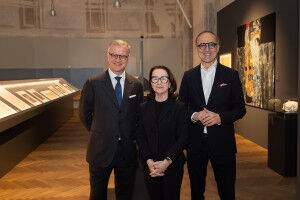
New special exhibition at the Josephinum is dedicated to Austria's exceptional artist Gustav Klimt
Health - Mar 25
University of Manchester supports landmark Russell Group commitment to build healthier communities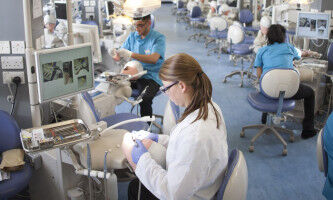
University of Manchester supports landmark Russell Group commitment to build healthier communities
Health - Mar 25
Cortical thickness, schizophrenia, and causality in psychiatry: when the trace is mistaken for the cause
Cortical thickness, schizophrenia, and causality in psychiatry: when the trace is mistaken for the cause
Career - Mar 25
Low-income students and girls are steered away from 'risky' creative careers at school
Low-income students and girls are steered away from 'risky' creative careers at school





news
University College London
Results 1801 - 1820 of 2145.
Health - Social Sciences - 02.12.2014
Influential UK birth cohort studies to be brought together for first time
One outcome of the IOE and UCL merger coming into effect today will be that all five of the UK's national birth cohort studies will be housed at the same institution for the first time, forming the largest concentration of birth cohort expertise in the world. Cohort studies are a type of longitudinal research that follow the same group of people throughout their lives, charting health and social changes and untangling the reasons behind them.
Health - 01.12.2014
Family history screening misses people at high risk of cancer
UCL research into the BRCA gene mutation in the the Jewish population show that only assessing family history misses half of the people with the mutation. Women carrying a BRCA 1 or 2 gene mutation have approximately a 15%-45% chance of getting ovarian cancer and a 45-65% chance of getting breast cancer.
Health - Life Sciences - 28.11.2014
Secret of tetanus toxicity offers new way to treat motor neuron disease
The way that tetanus neurotoxin enters nerve cells has been discovered by UCL scientists, who showed that this process can be blocked, offering a potential therapeutic intervention for tetanus. This newly-discovered pathway could be exploited to deliver therapies to the nervous system, opening up a whole new way to treat neurological disorders such as motor neuron disease and peripheral neuropathies.
Social Sciences - Life Sciences - 25.11.2014
Scientific methods shed new light on evolution of kinship patterns
New biological methods used to trace the evolutionary history of kinship patterns shed new light on how societies developed as farming spread across the globe during the Neolithic, according to new research by a UCL-led international team. Kinship is the web of social relationships that underlie human society, with lines of descent determining how wealth, land and position are inherited across the generations.
Physics - Life Sciences - 24.11.2014
Our bodies keep unwelcome visitors out of cell nuclei
The structure of pores found in cell nuclei has been uncovered by a UCL-led team of scientists, revealing how they selectively block certain molecules from entering, protecting genetic material and normal cell functions. The discovery could lead to the development of new drugs against viruses that target the cell nucleus and new ways of delivering gene therapies, say the scientists behind the study.
Health - 19.11.2014
New i-sense collaboration to improve monitoring of UK flu hotspots
An exciting new project to help monitor the spread of flu in the UK more accurately and earlier than ever before has been funded by i-sense, an £11m EPSRC-funded collaboration led by UCL. Flusurvey is the UK's biggest crowd-sourced study of influenza and through a new collaboration with i-sense, will combine innovative mobile and big data technologies with an online participatory flu monitoring platform flusurvey.org.uk to map trends as soon as seasonal flu takes hold.
Philosophy - Economics - 18.11.2014
Most people would rather harm themselves than others for profit
A UCL-led experiment on 80 pairs of adults found that people were willing to sacrifice on average twice as much money to spare a stranger pain than to spare themselves, despite the decision being secret. The study, conducted by researchers from UCL and Oxford University and funded by the Wellcome Trust, was the first to experimentally compare how much pain people were willing to anonymously inflict on themselves or strangers in exchange for money.
Health - Administration - 18.11.2014
One in ten British men say they have paid for sex
11% of men in Britain report ever paying for sex and 3.6% report paying for sex in the past five years, finds a UCL-led study funded by the Wellcome Trust and Medical Research Council. The study of 6,108 men, published in the journal Sexually Transmitted Infections, found that single men aged 25-34, in managerial or professional occupations and those who reported high numbers of sexual partners, were the most likely to say that they had paid for sex.
Astronomy & Space - 13.11.2014
Mars has macroweather too
But weather forecasting on the Red Planet is likely to be even trickier than on Earth Mars has the same three-part pattern of atmospheric conditions as Earth, finds a new study by researchers at UCL and McGill University. This includes weather, which changes day-to-day due to constant fluctuations in the atmosphere; climate, which varies over decades and a third regime called macroweather, which describes the relatively stable regime between weather and climate.
Health - Life Sciences - 06.11.2014
Cause of organ damage after heart attack and stroke found
Succinate, a molecule made when the body breaks down sugars and fats, can cause long-term damage to organs following a heart attack, stroke or transplant according to new research involving UCL scientists. The team behind the study hopes that new therapies will be developed to protect organs from damage following the discovery.
Administration - 05.11.2014
’London: the Information Capital’ showcases UCL data and mapping research
A new book bursting with London maps and infographics, published last week, is the result of a year of intense work by Dr James Cheshire (UCL Geography) and designer Oliver Uberti. 'London: the Information Capital' seeks to paint a contemporary portrait of the city through its abundance of open data and highlights a range of UCL research from departments including the UCL Centre for Advanced Spatial Analysis (CASA) and UCL Security and Crime Science.
Health - Life Sciences - 03.11.2014
Drug tests on mothers’ hair links recreational drug use to birth defects
Drug tests on 517 mothers in English inner city hospitals found that nearly 15% had taken recreational drugs during pregnancy and that mothers of babies with birth defects of the brain were significantly more likely to have taken drugs than mothers with normal babies. The study found no significant links between recreational drug use and any other type of birth defect.
Health - 03.11.2014
Sense of meaning and purpose in life linked to longer lifespan
A UCL-led study of 9,050 English people with an average age of 65 found that the people with the greatest wellbeing were 30% less likely to die during the average eight and a half year follow-up period than those with the least wellbeing. The study, published in The Lancet as part of a special series on ageing, was conducted by researchers from UCL, Princeton University and Stony Brook University.
Administration - 29.10.2014
Publishers address concerns on ’total cost of ownership’ of e-resources
UCL welcomes the news that two major academic publishers are to reduce the costs of their subscriptions against payments they receive to publish open-access articles from 2015. Research Councils UK and other funders require open access publication of research findings funded by them. However, this has left UCL - a long-term advocate of open access - and other research-intensives universities paying publishers twice: once in the form of article-processing charges in order to have papers published and again in the form of subscriptions in order to be able to read them.
Health - Life Sciences - 27.10.2014
Scientists identify potential cause for 40% of pre-term births
Scientists from UCL and Queen Mary University of London have identified what they believe could be a cause of pre-term premature rupture of the fetal membrane (PPROM) which accounts for 40 per cent of pre-term births, the main reason for infant death world-wide. The researchers, whose work was funded by the charity Wellbeing of Women, used bioengineering techniques to test the effect of repetitive stretch on tissues of the amniotic membrane which surrounds and protects the baby prior to birth.
Health - Life Sciences - 23.10.2014
How glands expand to fight off disease
The same specialised immune cells that patrol the body looking for signs of infection also trigger the expansion of glands called lymph nodes, which are the control centres of our immune system, according to new research from UCL and Cancer Research UK. Lymph nodes are small organs located across the whole body which contain immune cells that fight bacteria, viruses and cancer cells.
Health - Life Sciences - 22.10.2014
People with diabetes are less able to regulate the body’s responses to stress
People with type 2 diabetes are physically less able to recover from stress, finds a study by scientists at UCL and the University of Zurich, funded by the British Heart Foundation. These findings could lead to new approaches in the prevention and treatment of diabetes, targeting the wide number of biological changes that take place as a result of the disease.
Health - Life Sciences - 22.10.2014
Simplifying TB treatments to improve patients’ lives
Ways to simplify treatments for tuberculosis (TB) to reduce drug resistance and make it easier for patient to complete their course of treatment have been trialled by two international groups involving UCL scientists. The results from both trials, published today in the New England Journal of Medicine, found that novel drug combinations including the antibiotic moxifloxacin in TB treatment plans can approximately halve the number of pills that patients need to take but cannot shorten treatment time.
Life Sciences - Health - 17.10.2014
Amphibians being wiped out by emerging viruses
Scientists tracing the real-time impact of viruses in the wild have found that entire amphibian communities are being killed off by closely related viruses introduced to mountainous areas of northern Spain. Researchers from UCL, Zoological Society of London (ZSL) and Queen Mary University of London (QMUL) in the UK, and the National Museum of Natural Sciences (MNCN-CSIC) in Madrid, Spain found the viruses are causing severe disease and mass deaths in many amphibian species sampled, including frogs and salamanders.
Life Sciences - Health - 17.10.2014
Myelin vital for learning new practical skills
New evidence of myelin's essential role in learning and retaining new practical skills, such as playing a musical instrument, has been uncovered by UCL research. Myelin is a fatty substance that insulates the brain's wiring and is a major constituent of 'white matter'. It is produced by the brain and spinal cord into early adulthood as it is needed for many developmental processes, and although earlier studies of human white matter hinted at its involvement in skill learning, this is the first time it has been confirmed experimentally.


Health - Today
MedUni Vienna shows: By using their own voices, trainee doctors learn to better understand transgender perspectives
MedUni Vienna shows: By using their own voices, trainee doctors learn to better understand transgender perspectives
Art & Design - Mar 25
New special exhibition at the Josephinum is dedicated to Austria's exceptional artist Gustav Klimt
New special exhibition at the Josephinum is dedicated to Austria's exceptional artist Gustav Klimt
Health - Mar 25
University of Manchester supports landmark Russell Group commitment to build healthier communities
University of Manchester supports landmark Russell Group commitment to build healthier communities
Health - Mar 25
Cortical thickness, schizophrenia, and causality in psychiatry: when the trace is mistaken for the cause
Cortical thickness, schizophrenia, and causality in psychiatry: when the trace is mistaken for the cause
Career - Mar 25
Low-income students and girls are steered away from 'risky' creative careers at school
Low-income students and girls are steered away from 'risky' creative careers at school