


Art & Design - Today
New special exhibition at the Josephinum is dedicated to Austria's exceptional artist Gustav Klimt
New special exhibition at the Josephinum is dedicated to Austria's exceptional artist Gustav Klimt
Health - Today
University of Manchester supports landmark Russell Group commitment to build healthier communities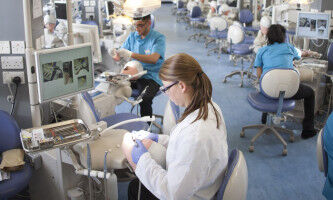
University of Manchester supports landmark Russell Group commitment to build healthier communities
Health - Today
Cortical thickness, schizophrenia, and causality in psychiatry: when the trace is mistaken for the cause
Cortical thickness, schizophrenia, and causality in psychiatry: when the trace is mistaken for the cause
Career - Today
Low-income students and girls are steered away from 'risky' creative careers at school
Low-income students and girls are steered away from 'risky' creative careers at school



Environment - Today
UCalgary expedition, with NASA, Canadian and European space agencies, sets out to better understand state of Arctic ice
UCalgary expedition, with NASA, Canadian and European space agencies, sets out to better understand state of Arctic ice


Social Sciences - Mar 24
Young people's wellbeing is improving in Greater Manchester, major survey finds
Young people's wellbeing is improving in Greater Manchester, major survey finds

Environment - Mar 24
Australia's environment is improving but climate change is 'accelerating' damage to ecosystems and wildlife
Australia's environment is improving but climate change is 'accelerating' damage to ecosystems and wildlife





news
University College London
Results 801 - 820 of 2143.
Health - Life Sciences - 08.10.2021
Alzheimer’s and Covid-19 share a genetic risk factor
A gene that impacts the risk of both Alzheimer's disease and severe Covid-19 has been identified by a UCL-led research team. The researchers estimate that one genetic variant of the OAS1 gene increases the risk of Alzheimer's disease by about 3-6% in the population as a whole, while related variants on the same gene increase the likelihood of severe Covid-19 outcomes.
Health - Life Sciences - 07.10.2021
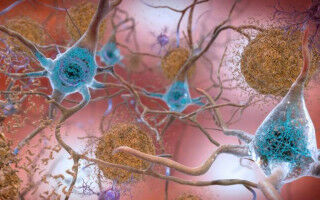
A well-known gene that increases Alzheimer's risk, called APOE4, has now been linked with better visual working memory in older adults, finds a new study led by UCL researchers. Joint senior author Professor Jonathan Schott (Dementia Research Centre, UCL Queen Square Institute of Neurology) said: "We have long known that possession of an APOE4 risk gene increases risk for Alzheimer's disease, but the exact mechanism by which it does so remains uncertain.
Life Sciences - 05.10.2021
Brain circuits that inhibit fear instinct identified
A brain mechanism that enables mice to override their instincts based on previous experiences has been discovered by a research team based at the Sainsbury Wellcome Centre at UCL. The study, published today in Neuron , identifies a new brain circuit in the ventral lateral geniculate nucleus (vLGN), an inhibitory structure in the brain.
Health - 05.10.2021
Worm mothers provide milk for their young
As worm mothers age, they secrete a milk-like fluid through their vulva that is consumed by their offspring and supports their growth, according to a new study led by UCL researchers. Scientists say the discovery, published , shows both a selfless and sacrificial act, and helps to explain a number of mysteries about the biology of ageing in the nematode worm Caenorhabditis elegans , widely studied to understand how organisms age.
Life Sciences - Physics - 04.10.2021
How apples get their shapes
Using theory, numerical simulations and lab experiments, a team led by UCL and Harvard researchers have shown for the first time how apples get their distinct shape. Apples are among the oldest and most recognisable fruits in the world. Humans have been drawing apples for millennia - their likeness has been captured by everyone from Caravaggio to Picasso.
Life Sciences - 30.09.2021
Genetic risks for depression differ between East Asian and European groups
Specific genes increase the risk of developing depression, according to a new study led by UCL researchers, which also shows that the genes associated with depression vary depending on ancestry group. The research, published in JAMA Psychiatry , is the largest study into the genetic risks of depression conducted in non-European populations.
Health - Psychology - 30.09.2021
People with prior mental ill health hit harder by pandemic disruption
People who had higher pre-pandemic levels of depression or anxiety have been more severely affected by disruption to jobs and healthcare during the pandemic, according to a new study co-led by UCL researchers. The study, published in The British Journal of Psychiatry and funded by UKRI, looked at data from 59,482 people who are surveyed regularly as part of 12 ongoing longitudinal studies in England.
Pharmacology - Health - 30.09.2021
Staying on long-term antidepressants reduces risk of relapse
When people stop taking antidepressants after a long period of use, just over half (56%) experience a relapse within a year, compared to 39% of those who stay on medication, finds a new study led by UCL researchers. The researchers say their findings, published in The New England Journal of Medicine , can help doctors and patients to make an informed decision together on whether or not to stop their antidepressants after recovery from a depressive episode.
Innovation - 30.09.2021
Visible passion wins investors over more than pitch content
Entrepreneurs pitching to investors should pay more attention to their visual cues to increase their chances of success. Visual information, that is, body language, gestures, facial expressions and visible passion, are far more influential on investor decision-making than previously thought. In the paper, published in Academy of Management Discoveries , the researcher found that when both expert investors and novices were played silent videos of entrepreneurial pitches, they were able to correctly identify the original investors' selections of winning pitches.
Transport - 29.09.2021
Lincoln and Hull among UK’s traffic collision hotspots
Cities such as Lincoln and Hull and towns including Woking, Maidstone and Ashford have more road traffic collisions than would be expected given their population size, a new study by UCL researchers has found. For the study, published in PLOS ONE , researchers analysed traffic collision data along with population data from over 300 urban areas in England, Wales, France, Germany and Spain in 2018 and, for Spain only, 2015.
Psychology - Health - 28.09.2021
Psychological factors impact adherence and violation of pandemic restrictions
How well people adhered to restrictions during the UK's Covid-19 lockdowns varied depending on their learning and decision-making styles, finds a study led by researchers at UCL and Royal Holloway, University of London. The study, published in Scientific Reports , reveals that multiple psychological factors predicted how people responded to the first national lockdown in spring 2020.
Health - Social Sciences - 28.09.2021
Youngest youngsters least willing to get COVID-19 jab
36% of 9-year-olds and 51% of 13-year-olds say they are willing to have a COVID-19 vaccination compared to 78% of 17-year-olds, finds a major study co-led by UCL, the University of Oxford and the University of Cambridge. The study, published today in EClinicalMedicine, is the only large-scale study to ask children and adolescents about their willingness to be vaccinated against COVID-19 and found that the younger you are the less likely you are to want a COVID-19 vaccination.
Health - Life Sciences - 24.09.2021
New cause of inherited heart condition discovered
A UCL-led research team has identified a new gene as a cause of hypertrophic cardiomyopathy, an inherited heart condition affecting one in 500 people. The discovery, published in the European Heart Journal , provides a new causal explanation for 1-2% of adults with the condition. (In the UK, this is approx. 1,250-2,500 people.
Pedagogy - 24.09.2021
National primary school tests have little effect on children’s happiness and wellbeing
National Curriculum Key Stage 2 tests taken by 10- and 11-year-old children in England to assess progress in English and Mathematics do not seem to affect children's wellbeing, according to new UCL-led research. The peer-reviewed study, published today in Assessment in Education, analysed data from around 2,500 children who live in England (where the KS2 tests are conducted) and in Northern Ireland, Scotland and Wales (where the tests do not take place) and are all participants of the Millennium Cohort Study (MCS).
Social Sciences - Health - 23.09.2021
Child abuse and neglect linked to early death in adulthood
Children who experience sexual or physical abuse or are neglected are more likely to die prematurely as adults, according to a new study analysing data from the 1950s to the present by researchers at UCL and the University of Cambridge. The study, published in BMJ Open , found that adults who reported experiencing sexual abuse by the age of 16 had a 2.6 times higher risk of dying in middle age - that is, between 45 and 58 - than those who did not report sexual abuse.
Social Sciences - 22.09.2021
Predicting a riot: social inequality leads to vandalism in experiments
Social inequality can incite collective violence in an experimental setting, finds a new study by UCL researchers. The project, funded by the Nuffield Foundation, was conceived following the London riots of 2011, as researchers sought to understand the origins of antisocial group behaviour. The findings are published today in Proceedings of the Royal Society B .
Health - 22.09.2021
Getting tested for COVID-19 and reporting your results
Getting tested for COVID-19 and reporting your results helps to reduce the spread of the virus. It also helps to protect those who could get seriously ill if they catch the virus. To keep our community as safe as possible, you should test yourself twice a week for COVID-19 even if you don't have symptoms.
Pharmacology - Health - 20.09.2021
New drug shows promise in slowing growth of bowel cancer
A new drug has shown promise in slowing the regrowth of tumours among some bowel cancer patients, according to new findings of a major trial run by researchers at UCL in collaboration with Oxford, Leeds and Cardiff universities. The results of the FOCUS4-C trial, which was funded by Cancer Research UK, the EME Programme - an MRC/NIHR partnership - and AstraZeneca, will be presented on Saturday (18 September) at the European Society of Medical Oncology and published in the Journal of Clinical Oncology .
Pedagogy - 20.09.2021
Family time increases parents’ wellbeing, especially couple time
Time spent together in families significantly contributes to mothers and fathers' happiness when compared to being alone, shows new research from a UCL academic. The research also finds that couple time spent alone without children contributes to the largest increase in wellbeing Published today in Sociology , the study analyses data from 236 couples who participated in the 2014-2015 United Kingdom Time Use Survey and finds that fathers often reported enjoying family time more than mothers do.
Health - Pharmacology - 20.09.2021
New Covid-19 treatment for patients with diabetes shows early promise
A new Covid-19 treatment for people with diabetes has shown promising results in a trial led by UCL researchers. The trial was conducted by St George Street Capital (SGSc) - a medical research charity - with the the goal to find new purposes, where there is a real clinical need, for drugs that have already passed safety checks Professors John Martin (UCL Division of Medicine) and Pete Coffey (UCL Institute of Ophthalmology) founded the charity along with an American philanthropist to trial new medicines four years ago.


Art & Design - Today
New special exhibition at the Josephinum is dedicated to Austria's exceptional artist Gustav Klimt
New special exhibition at the Josephinum is dedicated to Austria's exceptional artist Gustav Klimt
Health - Today
University of Manchester supports landmark Russell Group commitment to build healthier communities
University of Manchester supports landmark Russell Group commitment to build healthier communities
Health - Today
Cortical thickness, schizophrenia, and causality in psychiatry: when the trace is mistaken for the cause
Cortical thickness, schizophrenia, and causality in psychiatry: when the trace is mistaken for the cause
Career - Today
Low-income students and girls are steered away from 'risky' creative careers at school
Low-income students and girls are steered away from 'risky' creative careers at school
Environment - Today
UCalgary expedition, with NASA, Canadian and European space agencies, sets out to better understand state of Arctic ice
UCalgary expedition, with NASA, Canadian and European space agencies, sets out to better understand state of Arctic ice
Social Sciences - Mar 24
Young people's wellbeing is improving in Greater Manchester, major survey finds
Young people's wellbeing is improving in Greater Manchester, major survey finds
Environment - Mar 24
Australia's environment is improving but climate change is 'accelerating' damage to ecosystems and wildlife
Australia's environment is improving but climate change is 'accelerating' damage to ecosystems and wildlife