


Life Sciences - Mar 27
Understanding the Brain - TU Ilmenau's EU EMBRACE Project Nominated for European Excellence Award
Understanding the Brain - TU Ilmenau's EU EMBRACE Project Nominated for European Excellence Award
Social Sciences - Mar 27
A manual addresses, for the first time in Spain, child and adolescent sexual exploitation
A manual addresses, for the first time in Spain, child and adolescent sexual exploitation


Environment - Mar 26
Changing vegetation in thawing permafrost increases emissions of greenhouse gases
Changing vegetation in thawing permafrost increases emissions of greenhouse gases
Environment - Mar 26
University of Manchester hits major sustainability milestone, with Main Campus becoming 100% 'Zero Landfill'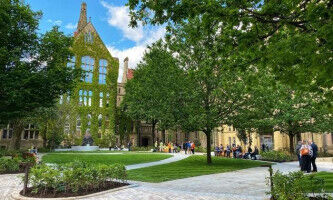
University of Manchester hits major sustainability milestone, with Main Campus becoming 100% 'Zero Landfill'
Social Sciences - Mar 26
"It would be naive to believe that a social media ban will solve all problems"
"It would be naive to believe that a social media ban will solve all problems"


Health - Mar 26
Earlier detection, better outcomes: Irish researchers target rising bowel cancer rates with new blood test
Earlier detection, better outcomes: Irish researchers target rising bowel cancer rates with new blood test

Environment - Mar 26
UK must improve energy efficiency to end 50 years of policy failure and prevent future energy crises, study argues
UK must improve energy efficiency to end 50 years of policy failure and prevent future energy crises, study argues
Mathematics - Mar 26
From Materials to Medical Imaging, Fonseca's Work Shapes the Future of Innovation
From Materials to Medical Imaging, Fonseca's Work Shapes the Future of Innovation


news
WATERLOO
Results 61 - 80 of 259.
Innovation - Computer Science - 05.07.2024

If you scroll through the average student's digital textbook or reading, you will probably see multi-coloured streaks scattered everywhere. However, new research reveals that excessive highlighting may do more harm than good. Researchers at Waterloo excel at creating new technologies, investigating human-technology interactions, and exploring how to mitigate harm.
Psychology - Innovation - 02.07.2024
Is AI conscious? Most people say yes
Two-thirds of people surveyed think that artificial intelligence (AI) tools like ChatGPT have some degree of consciousness and can have subjective experiences such as feelings and memories, according to a new study from the University of Waterloo. Large language models (LLMs) like ChatGPT often display a conversational style when outputting content.
Psychology - Pedagogy - 26.06.2024

It's a potentially life-altering medical condition typically diagnosed in childhood. The good news is treatment works well if followed properly. The bad news is the treatment is hard to stick to. An interdisciplinary team of University of Waterloo researchers is trying to improve treatment adherence through use of a social robot that can educate and motivate children and their caregivers.
Astronomy & Space - Physics - 21.06.2024

For the last seven decades, astrophysicists have theorized the existence of "kugelblitze," black holes caused by extremely high concentrations of light. These special black holes, they speculated, might be linked to astronomical phenomena such as dark matter, and have even been suggested as the power source of hypothetical spaceship engines in the far future.
Health - Innovation - 18.06.2024

Researchers develop a painless patch for continuous health monitoring. Researchers at two Ontario universities have developed a pain-free, wearable sensor that can continuously monitor levels of blood sugar, lactates and other critical health indicators for weeks at a time, sending results to a smartphone or other device.
Social Sciences - Computer Science - 29.05.2024
AI saving humans from the emotional toll of monitoring hate speech
Researchers use machine learning to identify hate speech with 88 per cent accuracy A team of researchers at the University of Waterloo have developed a new machine-learning method that detects hate speech on social media platforms with 88 per cent accuracy, saving employees from hundreds of hours of emotionally damaging work.
Environment - 22.05.2024
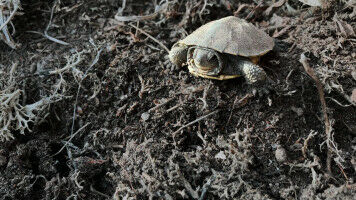
With Ontario's eight species of turtles considered at risk, a new nest designed by researchers has the potential to significantly bolster their struggling populations. The habitat is the first designed for turtles in rock barren landscapes, such as the research site around Georgian Bay. It uses moss and lichen.
Environment - Earth Sciences - 20.05.2024
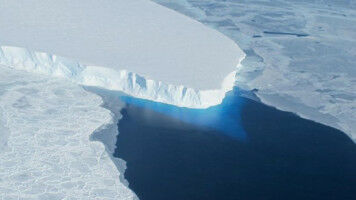
Satellite data provides first evidence of ocean water intrusion beneath Antarctica's Thwaites Glacier For the first time, there is visible evidence showing that warm seawater is pumping underneath Antarctica's Thwaites Glacier-ominously nicknamed the Doomsday Glacier. An international team of scientists-including a researcher from the University of Waterloo-observed it using satellite imagery and warns that it could accelerate catastrophic sea level rise in 10 to 20 years.
Environment - Architecture & Buildings - 15.05.2024
Using AI to improve building energy use and comfort
New study from Waterloo researchers creating climate change-proof buildings with deep learning-powered inspections University of Waterloo researchers have developed a new method that can lead to significant energy savings in buildings. The team identified 28 major heat loss regions in a multi-unit residential building with the most severe ones being at wall intersections and around windows.
Computer Science - Campus - 15.05.2024
Can AI help save beluga whales?
Beluga whale populations in the Arctic are under threat due to increased onand off-shore activities such as oil and gas development and climate change. Aerial surveys capture images over breeding and feeding regions and this is the most popular non-invasive approach for monitoring the populations of beluga whales and ensuring their distribution and health status.
Career - 14.05.2024
How to reward employees fairly and improve team dynamics
A recent study by researchers from the University of Waterloo and Wilfrid Laurier University has shed light on how to reward employees more fairly and improve team dynamics. The study found that when less skilled employees report their performance voluntarily, they often exaggerate their achievements and ask for higher bonuses.
Mechanical Engineering - 06.05.2024
A better way to ride a motorcycle
Motorcycles are designed to accommodate the average-sized rider, leaving taller and shorter riders vulnerable to discomfort. A new study from the University of Waterloo used software that predicted realistic motorcycle riding behaviours, considering human factors and ergonomic trade-offs. It found that shorter and taller statures require joint adjustments to achieve their preferred riding posture.
Health - Innovation - 24.04.2024

University of Waterloo researchers have invented a digital medical imaging system that significantly improves the cancer detection process to deliver immediate results and enable swift, effective treatment for all types of cancer. The Photon Absorption Remote Sensing (PARS) system, an innovative, built-from-scratch technology, is faster than traditional cancer-detection methods and aims to deliver a diagnosis in minutes - enabling prompt surgical intervention.
Health - Pharmacology - 15.04.2024
Canada likely to miss WHO’s Hepatitis C elimination target
Canada likely to miss WHO's Hepatitis C elimination target, research shows. Canada will not reach the original World Health Organization's (WHO) target of eliminating the Hepatitis C virus (HCV) by 2030 and lags in comparison to other developed countries, a new study led by researchers at the University of Waterloo has found.
Microtechnics - 11.04.2024

New Waterloo Engineering-led research quickens the response time for robots to react to human conversation Talking to a robot often feels stilted or delayed, thanks to computer software trying to keep up with the conversation. However, new research from the University of Waterloo has improved the ability for humans to communicate naturally with humanoid robots.
Microtechnics - 09.04.2024

Researchers track the personalities of social robots to improve how they interact with humans An interdisciplinary research team from the University of Waterloo's Social and Intelligent Robotics Research Lab (SIRRL) has found that people prefer interacting with robots they perceive to have social identities like their own.
Pharmacology - Social Sciences - 08.04.2024
Economic solution to Canada’s opioid crisis
Waterloo student uses mathematical modelling to bring awareness to opioid-related death reduction method Nasal-administered naloxone is more cost-effective and could help reduce the number of opioid-related fatalities compared to the current publicly funded intermuscular version, a new study has found.
Environment - Social Sciences - 08.04.2024

Environment As the world commemorates Earth Day 2024, a Waterloo researcher shares how we can unlock more Canadian restoration solutions with community and academic collaboration With the UN Decade on Ecosystem Restoration well underway, one message is taking center stage - we need to restore biodiversity on our planet.
Astronomy & Space - Physics - 04.04.2024

The first cosmological measurements from a global collaboration bring us one step closer to solving the mystery of Dark Energy Canadian scientists working with the Dark Energy Spectroscopic Instrument (DESI) participated in the DESI collaboration's first-year analysis of an exciting new three-dimensional map of the universe, providing details about our cosmological past that have never been seen before.
Astronomy & Space - Physics - 27.03.2024

Characteristics of the supermassive black hole at the heart of our galaxy captured in unprecedented detail by international team that includes Waterloo scientists Long-held theories on how black holes like the one at the centre of our galaxy, the Milky Way, evolve were proven right this week thanks to research made possible by Canadian scientists.


Life Sciences - Mar 27
Understanding the Brain - TU Ilmenau's EU EMBRACE Project Nominated for European Excellence Award
Understanding the Brain - TU Ilmenau's EU EMBRACE Project Nominated for European Excellence Award
Social Sciences - Mar 27
A manual addresses, for the first time in Spain, child and adolescent sexual exploitation
A manual addresses, for the first time in Spain, child and adolescent sexual exploitation
Environment - Mar 26
Changing vegetation in thawing permafrost increases emissions of greenhouse gases
Changing vegetation in thawing permafrost increases emissions of greenhouse gases
Environment - Mar 26
University of Manchester hits major sustainability milestone, with Main Campus becoming 100% 'Zero Landfill'
University of Manchester hits major sustainability milestone, with Main Campus becoming 100% 'Zero Landfill'
Social Sciences - Mar 26
"It would be naive to believe that a social media ban will solve all problems"
"It would be naive to believe that a social media ban will solve all problems"
Health - Mar 26
Earlier detection, better outcomes: Irish researchers target rising bowel cancer rates with new blood test
Earlier detection, better outcomes: Irish researchers target rising bowel cancer rates with new blood test
Environment - Mar 26
UK must improve energy efficiency to end 50 years of policy failure and prevent future energy crises, study argues
UK must improve energy efficiency to end 50 years of policy failure and prevent future energy crises, study argues
Mathematics - Mar 26
From Materials to Medical Imaging, Fonseca's Work Shapes the Future of Innovation
From Materials to Medical Imaging, Fonseca's Work Shapes the Future of Innovation