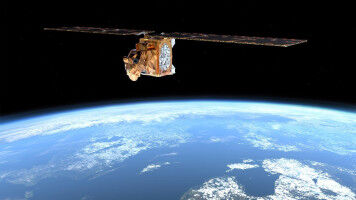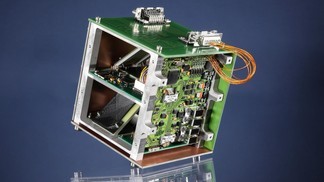
A new tool to calculate the orientation of a satellite with respect to the Earth, developed by EPFL students, will be on board a European Space Agency rocket scheduled to launch in March 2012. This will be an opportunity to test the tool in ideal microgravity conditions. An elegant invention, developed by a group of ten EPFL students, will take flight next March on a rocket launched in Sweden. The product of more than a year's work, it was accepted by the European Space Agency (ESA) after a lengthy selection process. The project offers a new method to calculate the orientation of a satellite with respect to the Earth. This is a very important function, because whether the goal is tele or taking pictures, satellites need to be pointed precisely towards Earth to work optimally. The tool - called the Gravity Gradient Earth Sensor - measures the gradient of gravitational forces, in other words, the rate at which gravity decreases as you go further away from the center of the Earth.
TO READ THIS ARTICLE, CREATE YOUR ACCOUNT
And extend your reading, free of charge and with no commitment.
Your Benefits
- Access to all content
- Receive newsmails for news and jobs
- Post ads