ANU joins the nanospace race »
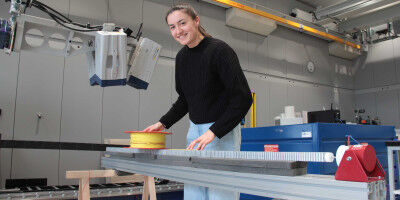
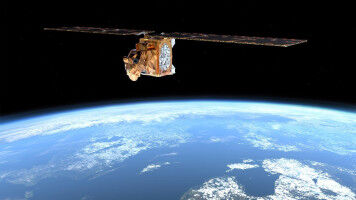
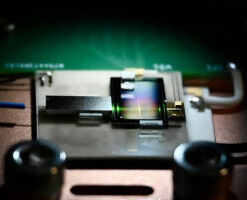
A major European satellite mission has turned to The Australian National University (ANU) to help test science units for nano-satellites ahead of a mass launch next year. Dr Dhiren Kataria, from University College London's Mullard Space Science Laboratory (MSSL), is visiting the ANU facilities to test the proto-flight instrument and conduct possible further tests on instruments for CubeSats - nano-satellites typically 10 centimetres cubed - in conditions similar to the upper atmosphere. The tests will be ahead of the launch of the QB50 space mission in 2016, which will see a mass launching of 50 CubeSats in a low orbit around Earth. The important contribution ANU could make to the project became apparent when ANU Professors Christine Charles and Rod Boswell visited the Mullard Space Science Laboratory earlier this year. "As we explained how our unique facilities could give them the low energy beams they need for testing, they became very excited and made plans to come to visit us immediately," said Professor Charles, from the ANU Research School of Physics and Engineering (RSPE). "The space simulation, plasma thruster and plasma diagnostics facilities at ANU are complementary to those at MSSL, significantly enhancing the ground calibration and testing of these instruments on Earth, which is very tricky to do." CubeSats are emerging as a space industry standard design for low-cost space research. Originally conceived for student projects, more than 100 CubeSats have now been launched around the Earth and even around Mars.