Stonehenge project dig
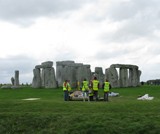
An archaeologist from the University of Sheffield, whose research has revolutionised our knowledge of Stonehenge, has been awarded a further £800,000 grant to discover exactly how the people who built the stone circle lived, what they ate and where they came from. Professor Mike Parker Pearson, from the Department of Archaeology at the University of Sheffield, along with his research team, will study how at the time of the Winter Solstice, Stone Age people would have needed to have brought livestock with them to Stonehenge to feed on. Initial research suggests the animals were brought considerable distances to this ceremonial site at this time of year. Funded by the Arts and Humanities Research Council (AHRC) as part of their annual large grants research scheme, this new project, entitled `Feeding Stonehenge´, will allow the team to answer some key questions about Stonehenge over the next three years. The team will develop their research further by analysing the bones of the cows slaughtered in the area 4,500 years ago to calculate where the cattle had been moved from to give a better guide of where the people had travelled from to visit the site. In addition, the archaeologists will aim to gain a better understanding of the dressing of the sarsen stones, study how the public and private spaces at Durrington Walls differ from each other and establish in which season animals were culled at Stonehenge and Durrington Walls. The grant forms one of 34 major research grants made by the AHRC in 2009 to projects that will help further our understanding of human culture and creativity.
TO READ THIS ARTICLE, CREATE YOUR ACCOUNT
And extend your reading, free of charge and with no commitment.