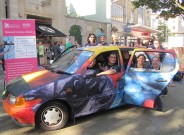
We even got requests for a bike and a wheelchair to be spray painted. It was a great experience because not only did the public discover that we engineers and scientists had creative sides, but I think we discovered it within ourselves as well.
Complicated concepts from the world of engineering, nanoscience and chemistry have been communicated on canvas thanks to postgraduate students from the University of Bristol who contributed to the huge success of See No Evil - the UK's largest permanent street art project. Ten PhD and EngD students joined 40 of the world's most prolific street artists as part of the diverse art project, which attracted 50,000 visitors to the city centre. The students not only spray-painted on large boards but also transformed a car in a bid to express the themes and ideas behind their research, translating science and engineering concepts into street art. Their work was overseen by Bristol-based contemporary artist Dan Petley , whose street art alter ego is Old Master. Members of the public, of all ages, stopped to watch as their work took shape and the car was transformed from a plain VW Polo into a work of art. Organisers estimate more than 20,000 poured into Nelson Street during Saturday daytime alone for the urban art festival, during which the biggest permanent art installation in the world was created. Natasha Watson, a postgraduate research engineer from the Industrial Doctorate Centre in Systems , used See No Evil as an opportunity to communicate the benefits of using straw bales, earth and hemp as building materials as opposed to steel and concrete.
TO READ THIS ARTICLE, CREATE YOUR ACCOUNT
And extend your reading, free of charge and with no commitment.