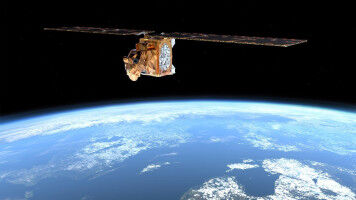
Cleaning up Earth’s orbit: A Swiss satellite to tackle space debris
The proliferation of debris orbiting the Earth - primarily jettisoned rocket and satellite components - is an increasingly pressing problem for spacecraft, and it can generate huge costs. To combat this scourge, the Swiss Space Center at EPFL is announcing today the launch of CleanSpace One, a project to develop and build the first installment of a family of satellites specially designed to clean up space debris. The Earth's orbit is full of all kinds of floating debris; a growing crowd of abandoned satellites, spent rocket stages, bits of broken spacecraft, and fragments from collisions are rocketing around the planet at breathtaking speeds. NASA keeps close tabs on at least 16,000 of these objects that are larger than 10 cm in diameter. When an operational spacecraft such as a satellite collides with one of them, serious, costly damage can result; often the satellite is complete destroyed. And the collision itself then generates thousands more fragments, further exacerbating the problem. "It has become essential to be aware of the existence of this debris and the risks that are run by its proliferation," says Claude Nicollier, astronaut and EPFL professor. To move beyond mere rhetoric and take immediate action to get this stuff out of orbit, the Swiss Space Center at EPFL is launching CleanSpace One, a project to build the first prototype in a family of "de-orbiting" satellites. The project developers have chosen a symbolic target for the initial CleanSpace One launch: either Switzerland's first orbiting object, the Swisscube picosatellite which was put in orbit in 2009, or its cousin TIsat, launched in July 2010. One satellite, three technological hurdles