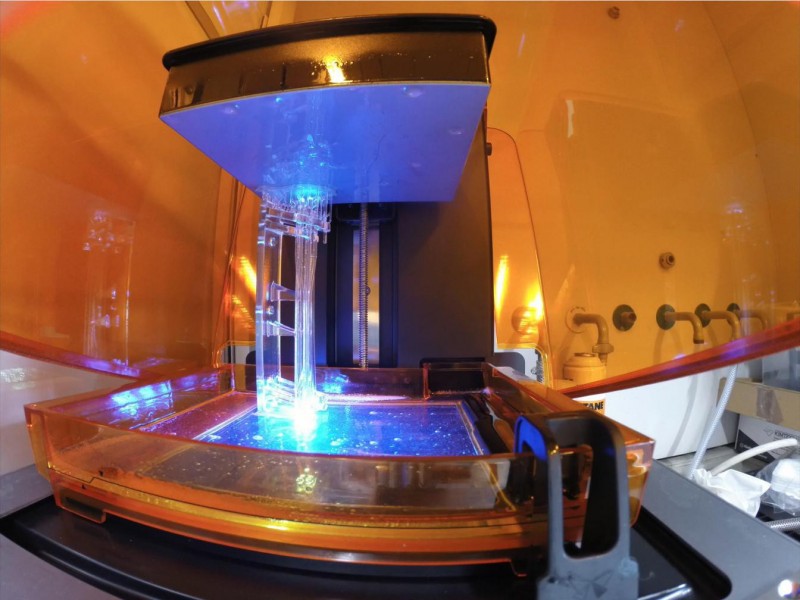
 The 3D printer used in this study
EPFL scientists have combined 3D-printing with electroplating to easily produce high-quality metal electrodes that can be used as a molecular beam-splitter. Many measurement techniques, such as spectroscopy, benefit from the ability to split a single beam of light into two in order to measure changes in one of them. The crucial device that separates the beam is the beam-splitter. These have been mostly limited to light beams, where one uses simply a partially reflective glass. EPFL scientists have now developed a similar device for splitting beams of molecules, where high-voltage electrodes are used to control the motion of the molecules inside a vacuum. The electrodes are built by an innovative method that combines 3D printing and electroplating for the fabrication of complex metallic structures. The same approach can also be used in a wide range of other experiments.
TO READ THIS ARTICLE, CREATE YOUR ACCOUNT
And extend your reading, free of charge and with no commitment.
Your Benefits
- Access to all content
- Receive newsmails for news and jobs
- Post ads