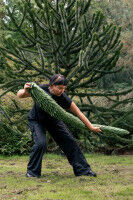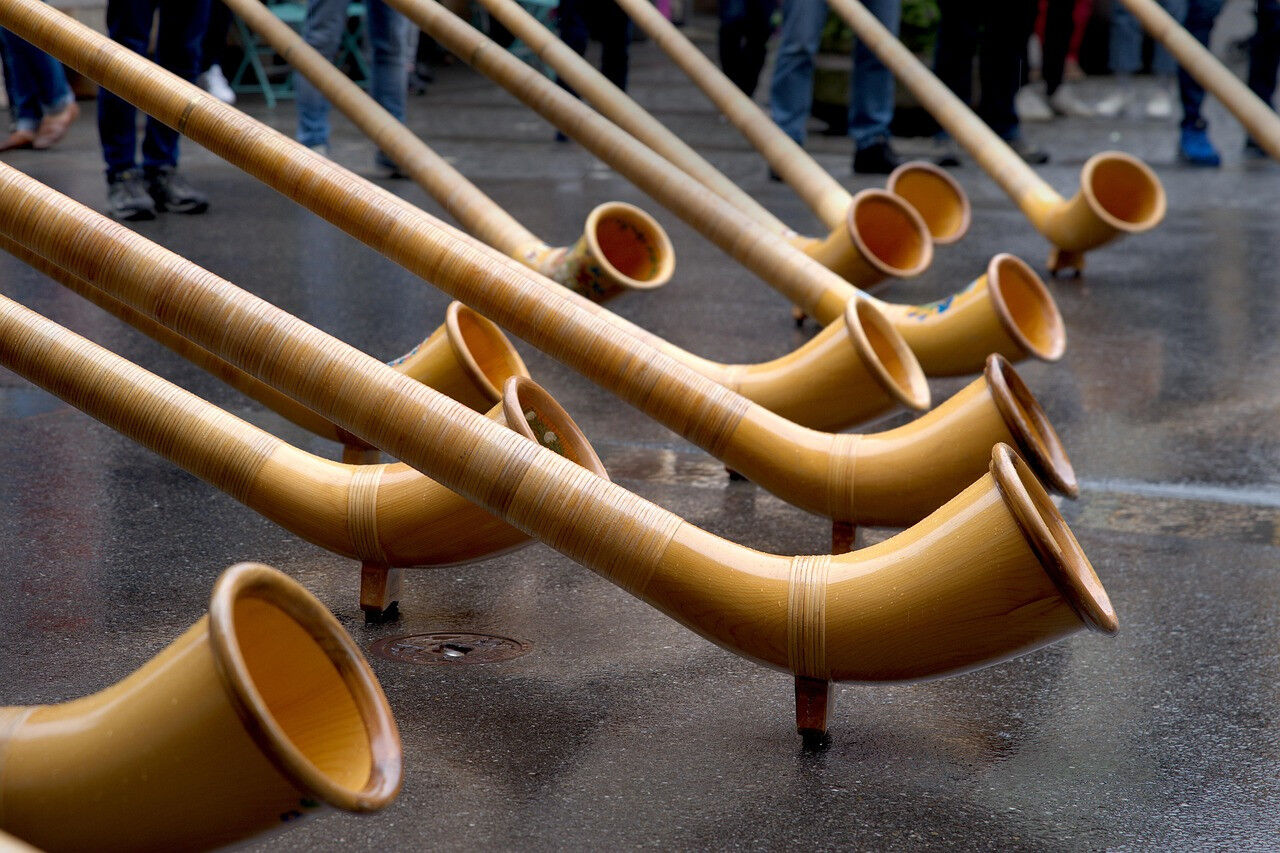
What happens when an algorithm starts a yodel or plays a Schwyzerörgeli? Researchers from Lucerne University of Applied Sciences and Arts invite visitors to the Alpentöne Music Festival in Altdorf to experiment with AI-generated folk music.
Alphorn sounds and the Muotathal "Juuzer" from the AI machine? An interdisciplinary research team from the Lucerne University of Applied Sciences and Arts in the fields of music and computer science wants to bring the topic of AI in folk music to life for a wide audience with an interactive exhibition at the Alpentöne Music Festival in Altdorf from August 14 to 17.
Exhibition aims to raise questions
Music educator Yannick Wey and his team have created a sonorous experience space: Festival visitors walk through the space and find switches, buttons and controls to orchestrate the AI. Something from Appenzell? Polyphonic singing is immediately heard. Or maybe something from the Bernese Oberland? Alphorn sounds boom through the room. The guests direct the computer as they wish, while AI-generated mountain panoramas flicker across the walls. "The room is designed to amaze, irritate and make you think," explains project manager Wey. The aim is for visitors to experience how machines create Swiss folk music and discuss the question of whether computers will soon yodel better than humans.Event with live AI performance
On Friday, August 15, there will also be a public symposium in which questions of AI in relation to folk music will be discussed and demonstrated in artistic approaches. The highlight will be a live performance in which AI reacts to musicians in real time - not pre-programmed, but improvising. A panel discussion will address key topics such as copyright, ethical issues and the role of cultural institutions.Folk music as a particular challenge for AI
But why hasn’t AI been an issue in folk music so far? "Folk music is stylistically very fragmented - Appenzell and the Bernese Oberland sound different. There are no publicly accessible, huge data sets that can be used to train AI. Everything is very regional," explains Wey. In addition, folk music is largely based on traditional knowledge that is passed on from person to person. "In order to artificially generate this stylistic diversity of folk music, an additional, even more demanding step is required than for pop music, which is international, digital and easily accessible."Social component in the foreground
That’s why Wey doesn’t see AI as a threat to folk music: "People are irreplaceable in the live experience. Folk music in particular thrives on making music together. It is people who give the experience meaning and dignity - something that AI cannot do." So what happens when the algorithm starts yodeling? The exhibition does not offer a definitive answer to this question. Instead, it aims to stimulate discussion. For Yannick Wey, one thing is clear: "The future of folk music does not depend on algorithms, but above all on how we as humans deal with technology."Alpentöne music festival
From August 14 to 17, 2025, the international Alpentöne music festival will bring around 40 ensembles to Altdorf, who will walk a tightrope between tradition and innovation with new interpretations of Alpine folk music. For this year’s edition, the festival went in search of languages and voices from the Alpine region between Slovenia and Provence, Bavaria and Aosta.
Interactive experience space
Vernissage: Wednesday, August 13, 2025, 6 pm
Accessible throughout the festival (August 14-17, 2025)
More information
Symposium
Friday, August 15, 2025, 10 a.m
Venue: Festival Alpentöne, Altdorf
More info
HSLU podcast on the topic
The podcast includes examples of AI-generated folk music pieces.
More info