Remi Villaggi
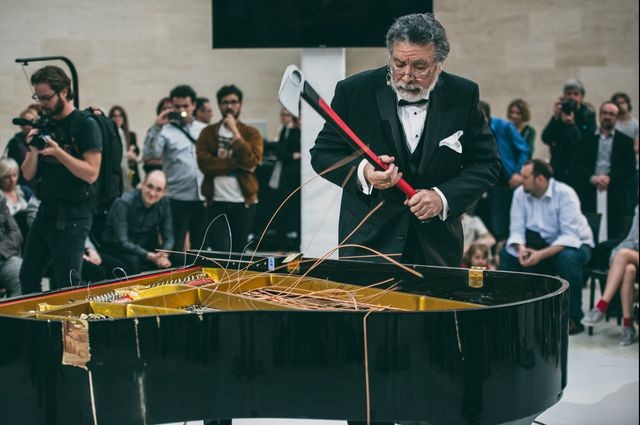
Ortiz’s Deconstructivist conceptual practice drew from Latino, indigenous and non-Western cultures to merge ritual with archaeology.
The 83-year-old artist and justice advocate earned acclaim for destroying household objects and creating sculpture from the detritus. Rebecca Epstein - Raphael Montañez Ortiz, a Puerto Rican American pioneer of the 1960s Destructivist art movement, and founder of the first Latino museum in the United States, will receive the UCLA Medal from Chancellor Block in a special ceremony June 8 celebrating Chicano art and culture in Los Angeles. Hosted by the UCLA Institute of American Cultures and the Chicano Studies Research Center, the event coincides with a week of activity for the artist, including the opening of a career retrospective at LAXART in Hollywood and the opening of the group exhibition "Home — So Different, So Appealing" at the Los Angeles County Museum of Art. Ortiz, 83, is the longest-practicing artist in the LACMA exhibition, which features work by U.S. Latino and Latin American artists since 1957 on the topic of "home." The exhibit is co-curated by Chon Noriega, director of the Chicano Studies Research Center, and co-organized by the resource center in collaborations with LACMA and the Museum of Fine Arts, Houston. Materials from the Raphael Montañez Ortiz Papers, which are part of Chicano Studies Research Center's library will be on display at the event, along with selections from other the center's archival collections. "In 1957 Ortiz created his first major work of art, which is now in the Smithsonian American Art Museum," Noriega said. "His continued achievements in art, education and social justice merit recognition.
TO READ THIS ARTICLE, CREATE YOUR ACCOUNT
And extend your reading, free of charge and with no commitment.