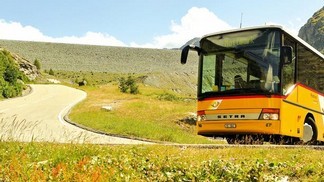
A study commissioned by PostBus Switzerland Ltd. and carried out in three EPFL laboratories identifies the needs and expectations of the Swiss public regarding "combined" mobility, which currently exhibits the strongest potential for growth in transporting passengers in Switzerland's metropolitan areas. The yellow PostBuses have a bright future in front of them if they manage to adapt to the requirements of contemporary society. The emblematic yellow Postbuses have been roaming the Swiss countryside for more than 100 years, serving even the country's most remote valleys. Changes in rural development, in the distribution of populations, and in their accompanying mobility needs, however, have meant that PostBus Switzerland Ltd., a subsidiary of Swiss Post, has had to continually adapt its service. The results of "Optima," a long-term study - three years of work done by twenty researchers - commissioned to EPFL (Ecole polytechnique fédérale de Lausanne) by PostBus Switzerland Ltd. are being published today. PostBus Switzerland now has additional tools in hand with which to direct its strategic development in the most pertinent manner possible. Three laboratories participated in the study, which was done under the aegis of EPFL's Transportation Center ( TraCE ): the Urban Sociology ( LASUR ) led by Vincent Kaufmann, the Transport and Mobility laboratory ( Transp-or ), led by Michel Bierlaire, and the Urban and Regional Planning Laboratory ( CEAT ), led by Martin Schuler.
TO READ THIS ARTICLE, CREATE YOUR ACCOUNT
And extend your reading, free of charge and with no commitment.
Your Benefits
- Access to all content
- Receive newsmails for news and jobs
- Post ads