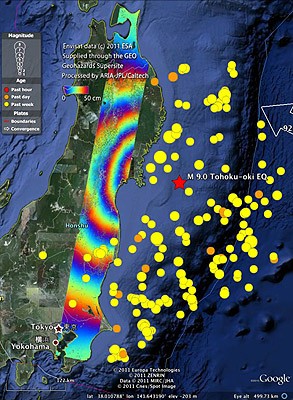
Interferogram showing ground movement
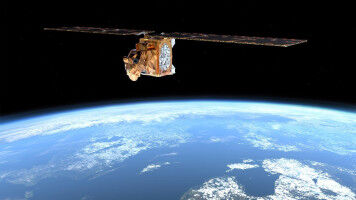
Focus on space debris: Envisat Space debris came into focus last week at the International Astronautical Congress in Naples, Italy. Envisat, ESA's largest Earth observation satellite, ended its mission last spring and was a subject of major interest in the Space Debris and Legal session. Envisat was planned and designed in 1987-1990, a time when space debris was not considered to be a serious problem and before the existence of mitigation guidelines, established by the UN in 2007 and adopted the next year by ESA for all of its projects. Only later, during the post-launch operational phase, did Envisat's orbit of about 780 km become a risky debris environment, particularly following the Chinese antisatellite missile test in 2007 and the collision between the Iridium and the Cosmos satellites in 2009. Lowering Envisat to an orbit that would allow reentry within 25 years, however, was never an option because of its design and limited amount of fuel. Even if controllers had lowered the satellite immediately after launch in 2002, there would not have been enough fuel to bring it down low enough - to around 600 km - where it could reenter within 25 years. In 2010, part of the remaining fuel was used to lower the satellite slightly into a less crowded orbit at 768 km, while keeping enough reserve to provide collision avoidance for several years.
TO READ THIS ARTICLE, CREATE YOUR ACCOUNT
And extend your reading, free of charge and with no commitment.