Galileo on Soyuz
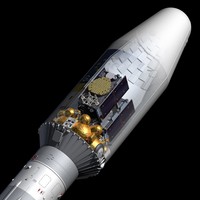
Galileo satellites moved to pad for Friday launch The two Galileo satellites and their upper stage have been enclosed within their protective fairing, and moved to join the Soyuz rocket on the launch pad. The halves of the fairing were sealed together around the satellites, their supporting dispenser and Fregat-MT upper stage on Friday, within the Upper Composite Integration Stand of building S3B of Europe's Spaceport in French Guiana. Yesterday, the Upper Composite was moved to the launch site, for vertical mating to its three-stage Soyuz ST-B rocket. The 4.1 m-diameter fairing protects the satellites from the stresses of launch and flight through the bulk of the atmosphere. It will be ejected about three and a half minutes into the flight, when the upper stage reaches the top of the atmosphere. Fregat, modified to carry extra propellants, will fire for the first time about 10.5 minutes after launch, raising the satellites up to orbital velocity and their operating altitude of 23 222 km. As it climbs, Fregat will spin slowly in 'barbecue mode', to keep the temperatures of the satellites even.
TO READ THIS ARTICLE, CREATE YOUR ACCOUNT
And extend your reading, free of charge and with no commitment.