German speaking Jews were force behind European unity
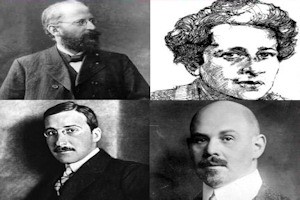
07 Jan 2014 A little-remembered Jewish culture in Germany and Austria between the 1870s and 1930s was a hotbed of ideas which drove the formation of the European Union, according to new research. Literary and film scholar Dr Cathy Gelbin from The University of Manchester says cosmopolitan German speaking Jewish intellectuals, many of whom met in the coffee houses of Berlin, Vienna and Prague, were among the first to see their identity as European. Her co-author on the Arts and Humanities Research Council funded study is the eminent cultural and literary historian Professor Sander Gilman from Emory University in Atlanta. Dr Gelbin said: "Our research shows these German speaking Jews had a powerful impact on the thinking which spawned post-1945 European unity, especially the EU. "Rather than sidelining this important contribution, as has been the case in recent public discussions, perhaps the time has come for their role to be recognised. "Even before the onset of Nazism, German-speaking Jews were seen as either too assimilated on the one hand but too international on the other. "This anti-Semitism, in all but name, had a profound effect on the community, rejecting the accepted definition of their own German and Austrian identities.
TO READ THIS ARTICLE, CREATE YOUR ACCOUNT
And extend your reading, free of charge and with no commitment.