Herschel to finish observing soon
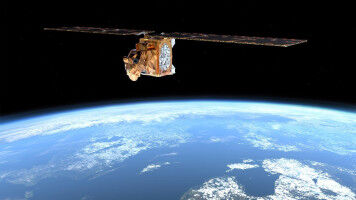
ESA's Herschel space observatory is expected to exhaust its supply of liquid helium coolant in the coming weeks after spending more than three exciting years studying the cool Universe. Herschel was launched on 14 May 2009 and, with a main mirror 3.5 m across, it is the largest, most powerful infrared telescope ever flown in space. A pioneering mission, it is the first to cover the entire wavelength range from the far-infrared to submillimetre, making it possible to study previously invisible cool regions of gas and dust in the cosmos, and providing new insights into the origin and evolution of stars and galaxies. In order to make such sensitive far-infrared observations, the detectors of the three science instruments - two cameras/imaging spectrometers and a very high-resolution spectrometer - must be cooled to a frigid -271°C, close to absolute zero. They sit on top of a tank filled with superfluid liquid helium, inside a giant thermos flask known as a cryostat. The superfluid helium evaporates over time, gradually emptying the tank and determining Herschel's scientific life. At launch, the cryostat was filled to the brim with over 2300 litres of liquid helium, weighing 335 kg, for 3.5 years of operations in space.