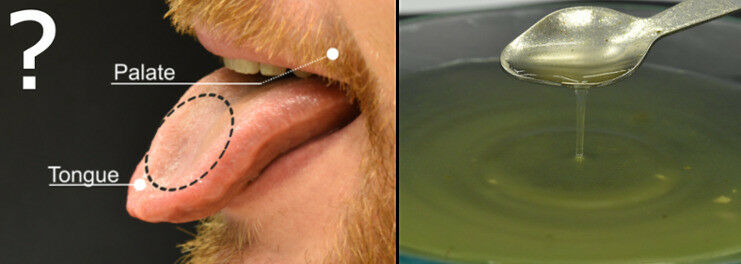
How do our brains perceive the impulses that our tongue and palate receive when tasting a liquid food like soup?
How do our brains perceive the impulses that our tongue and palate receive when tasting a liquid food like soup? - To be able to experience a wide range of impulses, our senses use 'logarithmic perception': a large increase in the impulse only leads to a small increase in what our brain perceives. A group of researchers from the University of Amsterdam, Unilever, and Wageningen University & Research now shows that this effect does not only hold for our ears and eyes, but also for the perceived thickness of liquid foods. Our capacities to appreciate the intensity of sound, light, or textures, are crucial for our interaction with the physical world around us. To allow us to experience a wide range of sound or light intensities, our senses soften the intensity of such stimuli when they are strong, and strengthen them when they are weak. However, the precise way in which the intensity of stimuli is related to their perceived strength is still a subject of debate among scientists. Logarithmic perception. For sound, for example, we can hear very soft noises and resist very loud ones.
TO READ THIS ARTICLE, CREATE YOUR ACCOUNT
And extend your reading, free of charge and with no commitment.