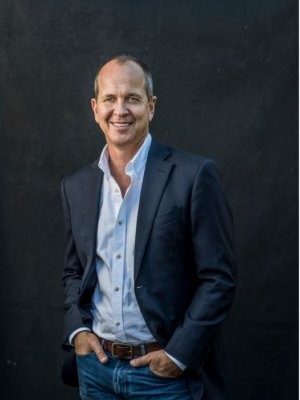
Mr Greste will join UQ School of Communication and Arts as the UNESCO Chair of Journalism and Communication early this year. Photo: Tim Bauer.
High profile foreign correspondent Peter Greste will help guide the future of journalism education after accepting an appointment at The University of Queensland. Mr Greste will join the UQ School of Communication and Arts as the UNESCO Chair of Journalism and Communication early this year. An internationally recognised journalist with numerous awards for his work, Mr Greste spent two decades reporting from the front line in the world's most dangerous countries before making headlines following his own incarceration in an Egyptian prison. Vice-Chancellor and President Professor Peter HÞj said Mr Greste's appointment demonstrated UQ's commitment to the study and practice of journalism in a changing world. "Charged with threatening national security and held in solitary confinement and detention for 400 days, Mr Greste himself became a victim of the ever-present dangers to journalists seeking to establish and report facts," Professor HÞj said. "By bringing a leading practitioner into the classroom as an advocate for the fundamental principles of free speech and a free press, we are helping prepare students to work with passion and integrity in a rapidly changing media landscape. "We are delighted that Mr Greste has accepted this role and we believe his experience working as a foreign correspondent for several global media outlets will provide our journalism and communication students with many wonderful new opportunities." Mr Greste said that after spending more than a quarter of a century on the road, covering international affairs for the BBC, Reuters and Al Jazeera, it felt like the right time to change gears and give something back to journalism.
TO READ THIS ARTICLE, CREATE YOUR ACCOUNT
And extend your reading, free of charge and with no commitment.