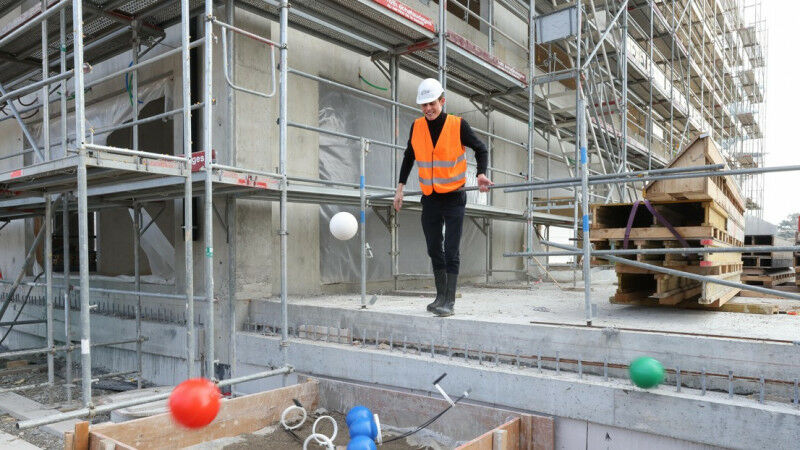
 Lucas Froissart carries out tests on the RTS site
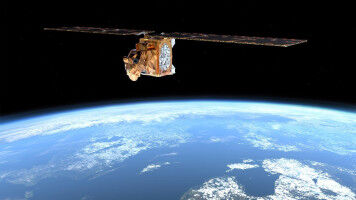
Lucas Froissart carries out tests on the RTS site © Alain Herzog 2022 EPFL EPFL engineering student Lucas Froissart designed an exoskeleton capable of propelling robot explorers into subsurface tunnels on the moon. A hundred meters below the surface of the moon lie caves untouched by humans. They were discovered about ten years ago, but space agencies want to send robots to investigate these mysterious cavities before astronauts venture in. -On the moon's surface, the temperature is 150 degrees above zero during the day and 150 degrees below zero at night,- says Lucas Froissart, who recently completed a Master's degree in mechanical engineering at EPFL. -In these subterranean caves, which can be reached through natural, vertical pits, the temperature is -30 degrees and there's no radiation. Since the climate is constant and tolerable for human beings, these tunnels could conceivably serve as base camps. Round robots During his Master's program, Froissart landed an internship at the Japan Aerospace Exploration Agency (JAXA). Because of the pandemic, however, he couldn-t go to Tokyo. He ended up doing his internship work in Professor Auke Ijspeert's lab, collaborating with his Japanese colleagues by video conference. Illustration of a lunar cave © 2022 EPFL Froissart's instructions were brief: he had six months to design a mechanism capable of propelling six explorer robots through the lunar tunnels. -I didn-t even get to see what these robots looked like. I was just told that they were like a gymnastic ball in terms of weight, size and rigidity,- he says. So Froissart bought some gymnastic balls and set to work building an exoskeleton that could hold six robots. How high the drop?
TO READ THIS ARTICLE, CREATE YOUR ACCOUNT
And extend your reading, free of charge and with no commitment.
Your Benefits
- Access to all content
- Receive newsmails for news and jobs
- Post ads