News from
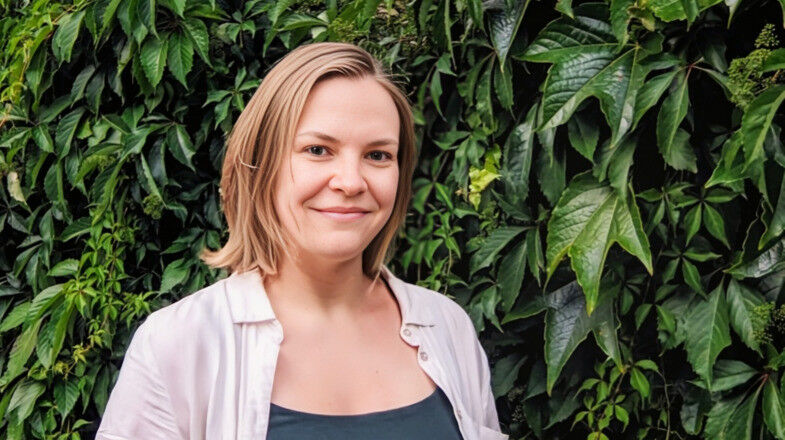
A new junior research group headed by Anna Shadrova started work at the Herder Institute at Leipzig University on July 1, 2025. It examines our language in detail. The young researchers are working on the topic of "Variability and path dependency of lexicon use in the context of multilingualism". The group, which is funded by the German Research Foundation (DFG) as part of the Emmy Noether Program, consists of four to five researchers.
the junior research group is concerned with the question of whether every person is unique in the way they use their vocabulary. For example, when someone describes a short video, we find an astonishing variety of ways in which people, objects or events can be described. So much so that we hardly find any overlap between two or three reports, even if the video shows a completely everyday situation," explains Anna Shadrova. According to her, the researchers do not know whether these differences are stable for the individual speakers or whether there are no such patterns and the same situation is described very differently each time. For example, if someone is putting groceries in a trunk, dozens of verbs are used in the description, even with a small number of participants, such as in/in/out/away/load/pack/do/put, stow, load, put away and so on.
This is particularly interesting when different languages are involved, as certain usage patterns are transferred between the languages. This happens even if both languages have been spoken and perfectly mastered since childhood. our research raises many exciting questions about how language works: For example, what is the relationship between our vocabulary in memory, the mental lexicon, and word usage?" says the linguist and German scholar. In this context, her junior research group will investigate questions such as whether the structure of the mental lexicon determines how we use words. And if there are such patterns, whether they are the same for everyone or whether there are individual differences.
Are multilingual speakers more flexible or more creative in their use of words?
As word usage also has a lot to do with how we write texts and how we argue, the group’s research also concerns the education system. For example, it will investigate whether multilingual speakers are more flexible or creative in their use of words and how this affects their language production at school or university.
In two three-year phases, it will first be clarified how lexical usage patterns can be meaningfully described, quantified and compared. The results will then be compared with psycholinguistic, experimental data from the same speakers. The aim is to develop a model of the lexicon in cognition, use and development, which could provide important insights into the diversity of linguistic thinking and language learning in an increasingly multicultural society. Experts from the Herder Institute at Leipzig University are cooperating with researchers from the Max Planck Institute for Human Cognitive and Brain Sciences in Leipzig, the University of Duisburg-Essen and the Rijksuniversiteit Groningen.
Dr. Anna Shadrova studied German language and literature, linguistics and music education in Bremen and Berlin and received her doctorate in general linguistics from Humboldt-Universität zu Berlin. From 2021 to 2024, she led the project "Corpus-linguistic methods" together with Anke Lüdeling at the Humboldt University as part of the DFG research group "RUEG - Research Unit Emerging Grammars in Language Contact Situations".