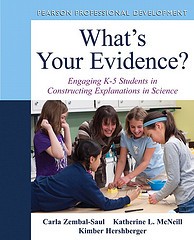
Carla Zembal-Saul, holder of the Kahn ship in STEM education at Penn State, is co-author of a newly released book, 'What’s Your Evidence? Engaging K-5 Students in Constructing Explanations in Science' (Pearson, 2012),designed to support K-5 teachers in integrating explanation-driven science in their classrooms.
UNIVERSITY PARK, Pa. The National Research Council's newly released Framework for K-12 Science Education captures contemporary thinking about the role of core ideas, cross-cutting themes, and scientific practices in science learning. Traditional methods of teaching science have been replaced with an emphasis on engaging students in constructing, applying, and evaluating scientific explanations beginning as early as kindergarten. While new approaches to science teaching engage students in authentic scientific practices and meaningful science learning experiences, it can be challenging for prospective and practicing elementary teachers who have never learned science in this way. Carla Zembal-Saul, holder of the Kahn professorship in STEM education at Penn State, is co-author of a newly released book designed to support K-5 teachers in integrating explanation-driven science in their classrooms. "What's Your Evidence? Engaging K-5 Students in Constructing Explanations in Science" (Pearson, 2012) examines the importance of scientific explanation in elementary science instruction. Zembal-Saul's co-authors are Katherine McNeill, faculty member at Boston College, and Kimber Hershberger, a third-grade teacher at Radio Park Elementary School in the State College (Pa.
TO READ THIS ARTICLE, CREATE YOUR ACCOUNT
And extend your reading, free of charge and with no commitment.