New satellites with ANU laser technology launched into space
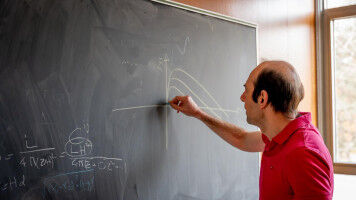
This can tell us about changes in sea level and it can give us a complete map of the melting of ice in Greenland or Antarctica, but it can also tell us how the ground water changes in the Murray Darling Basin from one month to the next. ANU scientists have helped design new satellite instruments that are part of a joint NASA and German mission launched into space today to study changes in water levels on Earth and other aspects of climate change. The GRACE Follow-On mission, the successor to the Gravity Recovery and Climate Experiment (GRACE) mission, launched into space from Vandenberg Airforce Base in California aboard a Falcon 9 rocket at 5.47am today AEST. The GRACE FO satellites were subsequently deployed into orbit at about 6am AEST. Professor Daniel Shaddock from ANU said the GRACE Follow-on mission will make precision measurements of gravity from space which can inform scientists how water is moving around the earth. "This can tell us about changes in sea level and it can give us a complete map of the melting of ice in Greenland or Antarctica, but it can also tell us how the ground water changes in the Murray Darling Basin from one month to the next," said Professor Shaddock from the ANU Research School of Physics and Engineering. The satellites were developed by American, German and Australian scientists, and Professor Shaddock led the Australian team that was funded by a $4.7 million Australian Space Research Grant.