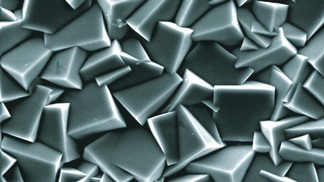
 Cuprous oxyde
Transforming solar energy into a usable form is a real challenge. One technique is to use semiconductors to store the energy as hydrogen. Unfortunately, the most efficient semiconductors are not the most stable. An EPFL team has just discovered that it is possible to protect the semiconductor with a uniform layer just a few nanometers thick. This discovery will make it possible to improve photoelectrochemical cells. In the same way that plants use photosynthesis to transform sunlight into energy, these cells use sunlight to drive chemical reactions that ultimately produce hydrogen from water. The process involves using a light-sensitive semi-conducting material such as cuprous oxide to provide the current needed to fuel the reaction.
TO READ THIS ARTICLE, CREATE YOUR ACCOUNT
And extend your reading, free of charge and with no commitment.
Your Benefits
- Access to all content
- Receive newsmails for news and jobs
- Post ads