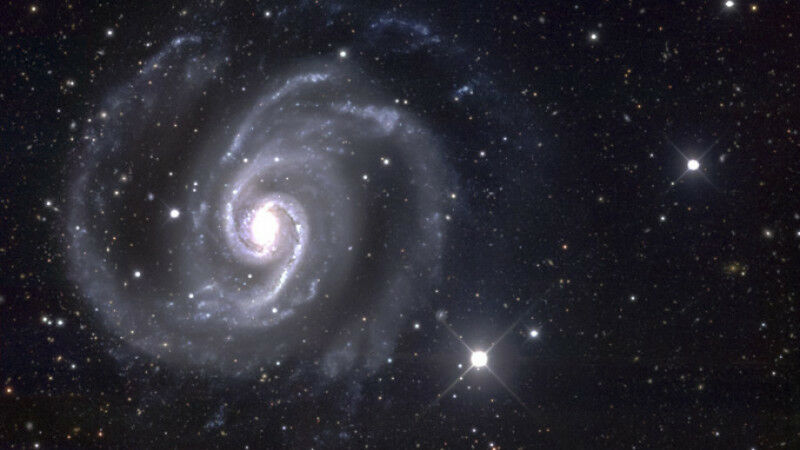
Image: NGC 1566, also known as the Spanish Dancer, a spiral galaxy in the constellation Dorado. Credit: DECam, DES Collaboration.
Image: NGC 1566, also known as the Spanish Dancer, a spiral galaxy in the constellation Dorado. Credit: DECam, DES Collaboration. Nearly 700 million astronomical objects have been carefully catalogued and made public as part of a major international collaboration involving researchers from The Australian National University (ANU). The latest data release from the Dark Energy Survey means the project has now mapped roughly an eighth of the night sky, stretching back to almost the beginning of time in some cases. This makes it one of the world's largest astronomical catalogues. The Australian part of the survey is jointly led by ANU astronomer Dr Christopher Lidman and Professor Tamara Davis from the University of Queensland. They hope the project can answer some of our biggest questions when it comes to our Universe, including what it's made of and how it began. - "This is the culmination of years of effort.
TO READ THIS ARTICLE, CREATE YOUR ACCOUNT
And extend your reading, free of charge and with no commitment.