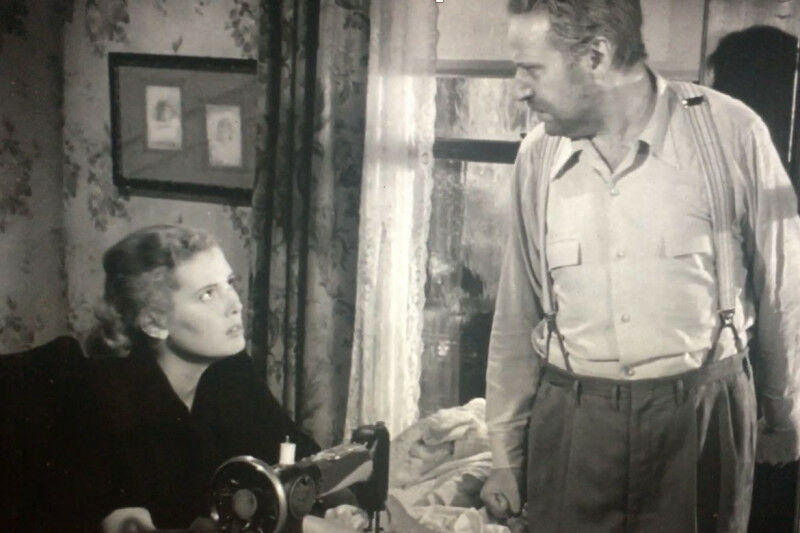
Hugo Haas A still from Hugo Haas’ film ’Girl on the Bridge’ (1951).
Hugo Haas A still from Hugo Haas' film 'Girl on the Bridge' (1951) . The true story of Hugo Haas could read like fiction. Haas, who was born in Czechoslovakia, fled the Nazis in the late 1930s, made his way to Hollywood and became a character actor before elevating to producer, writer and star in his own B-movie studio. Haas' films have typically been dismissed as mediocre, although Martin Scorsese has said he reveres them. The inaugural Lowell Milken Lecture in Jewish Music provides a chance to reconsider the importance of Haas' work. Haas' films are buttressed by a series of secrets involving visual and sonic images of his dead brother Pavel, a brilliant composer and JanáÄek student who was murdered in Auschwitz, and the Holocaust itself, which for the most part goes unmentioned, even in those films where its existence is central. Michael Beckerman, the Carroll and Milton Petrie Professor of Music at New York University, will deliver his lecture "Hugo Haas' Big Secret — Hiding Pavel and Hiding the Holocaust" on Tuesday, May 3 at 5 p.m. in Lani Hall.
TO READ THIS ARTICLE, CREATE YOUR ACCOUNT
And extend your reading, free of charge and with no commitment.