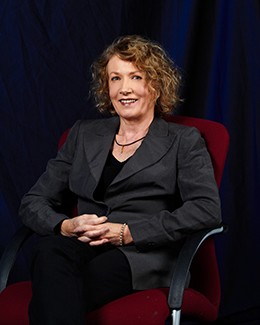
Alison Booth. Photo by StudioVogue.
Why are women underpaid in comparison to men? And what's the solution? Academic and author Alison Booth thinks finding the answer may mean revisiting our past. By MARTYN PEARCE. There's a saying that we all have one good book in us. But how many of us have actually tried to write that one good book, or would be brave enough to submit it to a publisher, or face the scrutiny of strangers who read it? The idea of adulation, or riches, may be appealing, but knowing the hard work and high potential for heartache along the way, would you really be brave enough to write it? Would you take that risk? Risk is something that Alison Booth, labour economist, academic and fiction author, knows all about. Booth, a researcher in the ANU College of Business and Economics, and one of the University's Public Policy Fellows, has never shied away from risk throughout her career - the risk of being a female academic in a male-dominated research area; the risk of expressing herself and her imagination on the pages of her books; and studying and researching the risk taking of other women - and of men - and, more specifically, why it is that in some situations women don't take risks at all. The answer, her research suggests, may lie in something we firmly associate with the past. "It's still the case that, even controlling for all factors that affect wages, women are paid about 16 per cent less than males," she says. "About 10 years ago, some economists began saying that's because women are intrinsically less competitive, or less willing to take risks, so they don't get the rewards from those things. "Of course, that raises the question: what's the optimum level of risk aversion in people?
TO READ THIS ARTICLE, CREATE YOUR ACCOUNT
And extend your reading, free of charge and with no commitment.