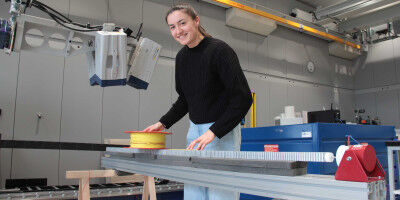
Sigrid Close
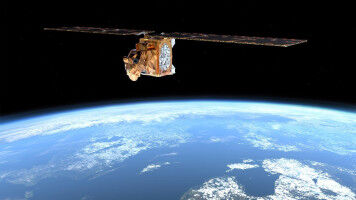
The large meteoroid that struck Russia last week is just one of the factors in space that cause satellites to fail. Sigrid Close is proving that the effects of "space dust" are a more likely cause. New research suggests she's on track to solve a mystery that has long bedeviled space exploration: Why do satellites fail? In the popular imagination, satellites are imperiled by impacts from "space junk" - particles of man-made debris the size of a pea (or greater) that litter the Earth's upper atmosphere - or by large meteoroids like the one that recently exploded spectacularly over Chelyabinsk, Russia. Although such impacts are a serious concern, most satellites that have died in space haven't been knocked out by them. Something else has killed them. The likely culprit, it turns out, is material so tiny its nickname is "space dust." These natural micro-meteoroids are not directly causing satellites harm. When they hit an object in space, however, they are traveling so fast that they turn into a quasi-neutral gas of ions and electrons known as plasma.
TO READ THIS ARTICLE, CREATE YOUR ACCOUNT
And extend your reading, free of charge and with no commitment.