Message from
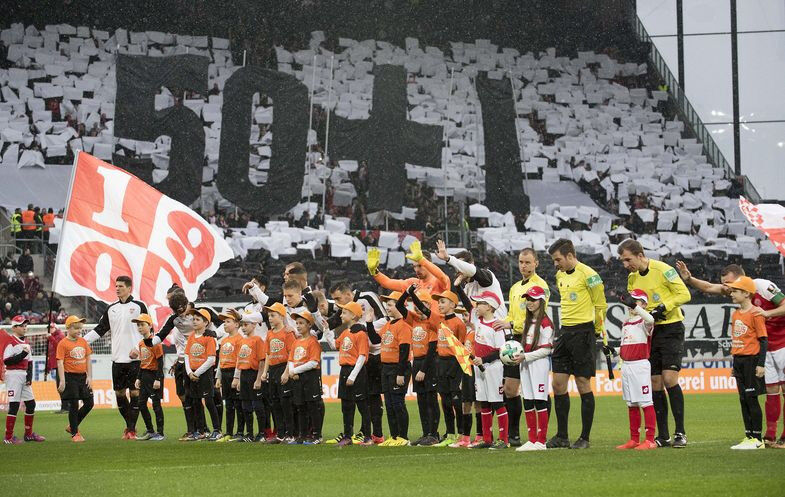
The German Federal Cartel Office has no fundamental objections to the 50+1 rule in German professional soccer, it announced on June 16, 2025. This rule stipulates that the parent club must hold the majority of voting shares in a corporation in order to limit the influence of investors in the Bundesliga 1 and 2. However, it qualifies this: "Following an in-depth investigation into the application practice of the 50+1 rule, the Bundeskartellamt [...] is of the opinion that the DFL [editor’s note: German Football League] should take concrete measures to ensure that the rule is applied in a legally secure manner in future." What does that mean in concrete terms? We asked sports economist Dr. Sebastian Björn Bauers, who has been researching the 50+1 rule for more than ten years and has just launched a "survey on the co-determination and co-determination of soccer fans and club members in German professional soccer" with his team.
Dr. Bauers, the Federal Cartel Office sees a need for improvements to the 50+1 rule . Please briefly explain: Why did the Bundeskartellamt make a decision in the first place and what exactly was decided?
The Bundeskartellamt has been examining the 50+1 rule on the initiative of the (DFL) since 2018. In 2021, the Bundeskartellamt came to the preliminary conclusion that the basic rule may be unobjectionable under antitrust law due to its sports policy objectives. However, it was critically emphasized that the rule is not applied and enforced uniformly. The Bundeskartellamt referred to the exceptions to the 50+1 rule. In this context, the DFL had proposed to the Bundeskartellamt that the exemption rule in the DFL statutes be deleted. However, due to a new ruling by the European Court of Justice, the Bundeskartellamt announced in May 2024 that further investigations into the application of the 50+1 rule were necessary.
In its latest assessment, the Bundeskartellamt once again emphasized that there are no fundamental concerns about the 50+1 rule. However, three specific recommendations have been developed and communicated, resulting in a certain amount of pressure on the DFL to act. Firstly, this involves uniform open access to membership of the parent club, which in turn should enable fans to have a say. Secondly, it is about a consistent voting practice and application of the 50+1 rule in the DFL’s committees - and thirdly, there should no longer be protection for so-called "Werksklubs" in the future because the Federal Cartel Office sees competitive advantages on the part of the clubs concerned.
What does the decision mean for the DFL and its member clubs? Is the decision binding?
The Bundeskartellamt’s assessment and recommendations should initially be seen as an aid for the DFL. However, the current situation increases the pressure enormously. This means that the pressure to act is increasing for all parties involved and a solution should be developed and found. Otherwise, the risk of legal action being taken against the rule is likely to increase. I therefore consider the current situation to be particularly relevant and also groundbreaking for German professional soccer. It is now up to the DFL to implement the recommendations at its own discretion. I assume that the DFL will take on a mediating role and address the deficits described by the Bundeskartellamt.
Bayer Leverkusen and VfL Wolfsburg have announced that they reserve the right to take legal action. What is the background?

Bayer Leverkusen and VfL Wolfsburg make use of the 50+1 rule exemption. The exemptions relate to decisions that were made over 25 years ago. An exception could be claimed if a company has continuously and significantly supported the parent club’s soccer sport for more than 20 years. The constellations concerned were the Bayer Group and Bayer Leverkusen as well as the Volkswagen Group and VfL Wolfsburg. in both cases, "exception" means that the companies can control the majority of the respective professional division. This means that no parent club and no co-determination of club members is required, as the 50+1 rule generally stipulates. Until now, these so-called "works clubs" have been granted protection.
However, the Bundeskartellamt now says that there must be a parent club that is open to members and has majority control of the professional division. This would entail significant structural changes at the clubs in question. Against this background, I can understand the reaction of both clubs to defend the status quo if necessary. However, I believe that a consensus-based solution that is in line with the Bundeskartellamt’s recommendations is possible.
Survey of soccer fans
The co-determination of fans in German professional soccer is the subject of a survey you are currently conducting. What is the aim of this survey and who is it aimed at?
I have been researching the 50+1 rule for over ten years. Together with my colleagues Sandy Adam and Gregor Hovemann, I am conducting the current "Survey on the co-determination and co-determination of soccer fans and club members in German professional soccer" (until July 25, 2025). With our survey, we want to gain a better understanding of "co-determination". This means that the term is often used in a general and abstract way, especially in the discussion about the 50+1 rule. We also want to better understand what is important to club members and soccer fans in terms of co-determination at their favorite club, both today and with a view to the future. Given this background, our research can make a concrete contribution to how co-determination of club members and fans can be shaped at professional soccer clubs.
The survey is initially aimed at club members, as they traditionally have a say in important decisions at their club - for example in the election of the board, the spin-off of the professional division or changes to the articles of association. However, our survey is also aimed at fans who are not club members, as they are also directly or indirectly affected by many of these decisions.
To the survey (until July 25, 2025)
"Co-determination and co-determination of soccer fans and club members in professional soccer by the Chair of Sports Economics and Sports Management at Leipzig University"