Stanford physicist wins prestigious Dirac Medal
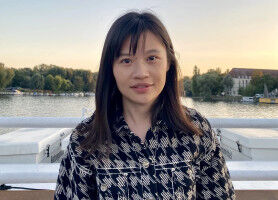
Stanford physics Professor Shoucheng Zhang has won the prestigious Dirac Medal, in recognition for his work advancing the understanding of an exotic form of matter known as a topological insulator. By Bjorn Carey At the peak of the Olympic Games, the gold medal of theoretical physics has just been announced. Stanford physics professor Shoucheng Zhang and two other physicists were awarded the Dirac Medal from the International Centre for Theoretical Physics for their research on a novel type of matter known as a "topological insulator." Topical insulators are one of the most exciting topics in condensed-matter physics, because of both their conceptual beauty and their exciting practical applications. The materials function as insulators on the inside, but they conduct electricity on their surface; this conductivity is "topologically protected," so the state of the electrons passing on the surface cannot be changed or destroyed. Because the conducting electrons arrange themselves along the surface - "spin-up" electrons travel in only in one direction, "spin-down" electrons go only the opposite - the material could be useful for building a practical "spintronic" device that reads an electron's spin, rather than its charge. Unlike most exotic phases of matter, topological insulators were predicted theoretically before they were discovered experimentally. Zhang predicted the first topological insulator material in mercury telluride, which was confirmed experimentally soon after by a group at the University of Wurzburg in Germany.