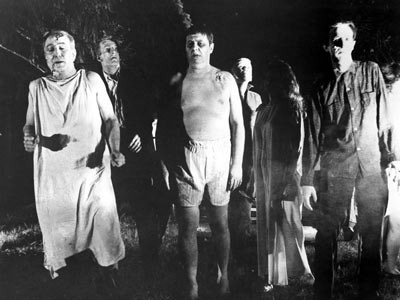
An image from George Romero’s seminal 1968 film Night of the Living Dead . Stanford researcher Angela Becerra Vidergar says the fascination with zombies can be traced to the advent of nuclear warfare during World War II.
Stanford Report, February 20, 2013 - Stanford literary researcher ties our modern obsession with zombies to the survivalist mentality that developed after World War II. From the popularity of violent video games to the skyrocketing appeal of the zombie thriller TV show The Walking Dead, it seems like everyone is talking - at least in pop culture circles - about the apocalypse. The fascination with the end of the world, says Stanford literary scholar Angela Becerra Vidergar , can be traced to the advent of nuclear warfare during World War II. Our collective visions of the future changed drastically after the horrific events of Hiroshima and Nagasaki, explains Vidergar. Mass destruction became a reality and the terrible violence of the Holocaust and other WWII events brought up disturbing realizations about the human capacity for violence. We no longer necessarily "imagine the type of positive future that was more prevalent in centuries past, for example, during the Enlightenment or the Industrial Revolution," said Vidergar. Vidergar explores these themes in her doctoral dissertation, Fictions of Destruction: Post-1945 Narrative and Disaster in the Collective Imaginary.
TO READ THIS ARTICLE, CREATE YOUR ACCOUNT
And extend your reading, free of charge and with no commitment.