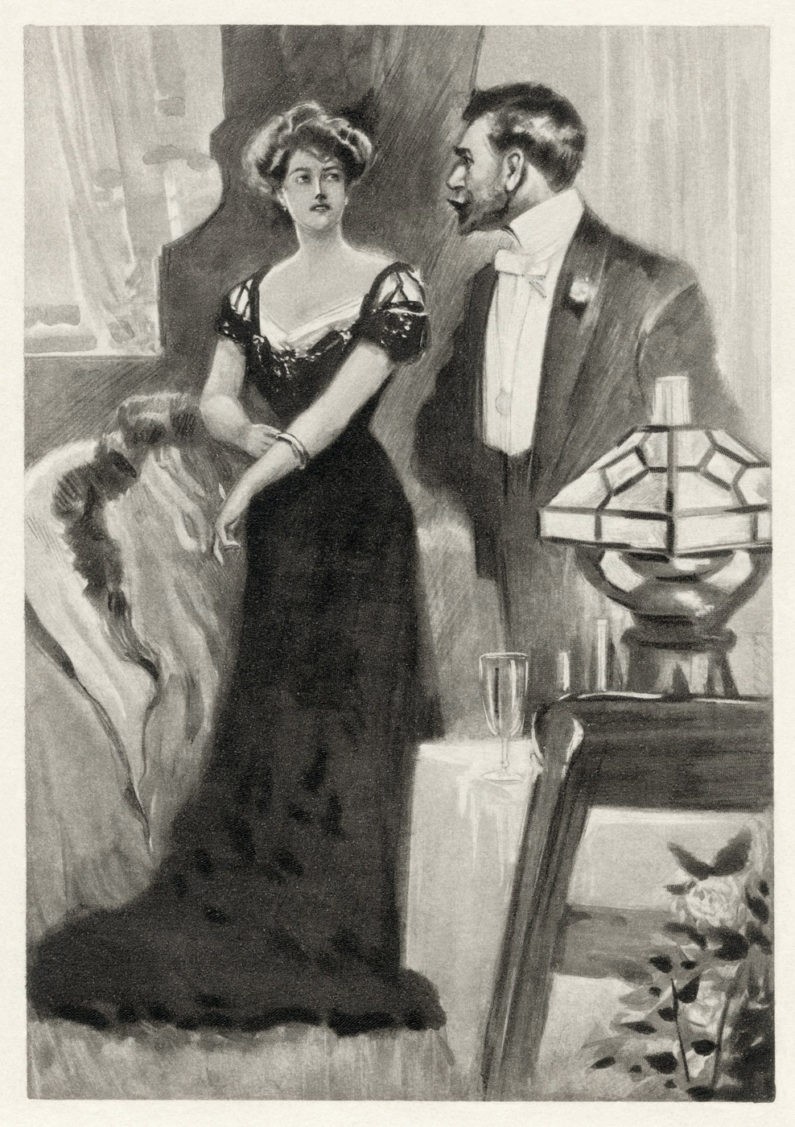
Sexual tension is indicated obliquely in Victorian novels, but novelists found ways around societal strictures. (Image credit: Wikipedia)
In Queen Victoria's England, novelists lodged erotic innuendo in descriptive passages for characters to express sexual desire. Can a work of art be erotic without directly mentioning sex or sexuality? According to Claire Jarvis, a professor of English at Stanford, novelists in Victorian England mastered the art of building erotic tension without uttering a word about sex itself. They achieved this by planting a recurring type of character - the 'dominant woman' - in scenes of ornate description. 'It's not that people in the 20th century invented the representation of sex,' Jarvis said. Rather, 'the respectable novel didn't show sex within its pages until the 20th century. Victorian novels had to find ways to build erotic tension without using explicit language.' By 'dominant,' Jarvis means 'sexually aggressive female characters' - or, as she explained, 'women who seemed to be imperious, who challenged the traditional marriage plot and who were in some ways the early version of a femme fatale .' Jarvis' book, Exquisite Masochism: Marriage, Sex, and the Novel Form , finds that dominant women often appear in erotically charged scenes. Scenes of this sort frequently have 'masochistic' overtones with sexual desires left unfulfilled or denied outright.
TO READ THIS ARTICLE, CREATE YOUR ACCOUNT
And extend your reading, free of charge and with no commitment.