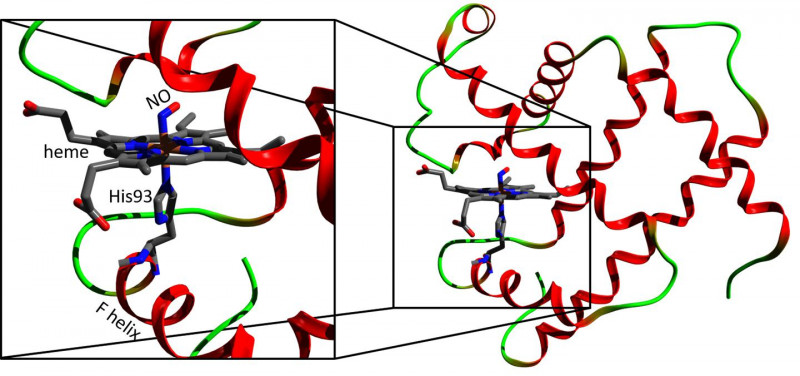
Myoglobin (right) and its heme region (left). Credit: Majed Chergui (EPFL)
Myoglobin ( right ) and its heme region ( left ). Credit: Majed Chergui (EPFL) - Physicists from Switzerland, Japan and Germany have unveiled the mechanism by which the first event of respiration takes place in heme proteins. Respiration is a fundamental process of all living things, allowing them to produce energy, stay healthy, and survive. In cells, respiration involves what are known as "respiratory proteins", e.g. hemoglobin in the blood and myoglobin in muscles. Respiratory proteins work by binding and releasing small molecules like oxygen, carbon monoxide etc., called ligands. They do this through their "active center", which in many respiratory proteins is a chemical structure called heme porphyrin. Binding and releasing small molecules causes changes in the heme's molecular and electronic structure.
TO READ THIS ARTICLE, CREATE YOUR ACCOUNT
And extend your reading, free of charge and with no commitment.