 Spider silk used as a chemical detector.
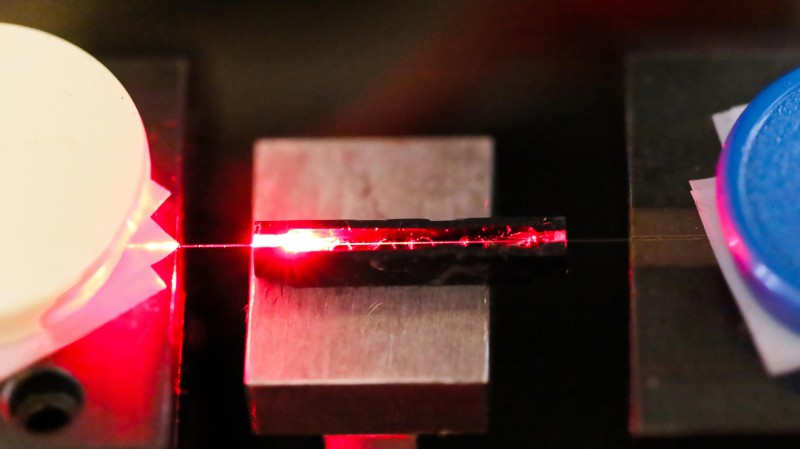
13. At EPFL, fiber optics specialists have discovered some unique qualities of spider silk when it comes to conducting light and reacting to certain substances. "It's unexpected and extremely promising!" Luc Thévenaz, the professor in charge of EPFL's Group for Fibre Optics, recently experienced a eureka moment in his research. Picking up on an idea proposed by a discussion group of the European Space Agency, he shifted his attention away from traditional fibers made of glass and focused on the silk strands that spiders produce for their webs. These strands are perfectly cylindrical, smooth, transparent and extremely solid - some of the same characteristics as glass-based fibers. But there is one major difference: while glass is inert, spider silk is made up of very long proteins rolled into a helix structure whose bonds are sensitive to a number of chemical substances. Reusable chemical sensors - "The helix in the silk strands unwinds whenever polar molecules like acetic acid and ammonia come into with its bonds," said Dr. Thévenaz.
TO READ THIS ARTICLE, CREATE YOUR ACCOUNT
And extend your reading, free of charge and with no commitment.
Your Benefits
- Access to all content
- Receive newsmails for news and jobs
- Post ads