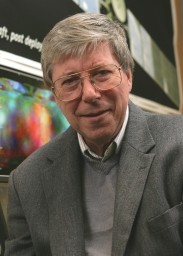
Christopher T. Russell
Many collisions occur between asteroids and other objects in our solar system, but scientists are not always able to detect or track these impacts from Earth. The "rogue debris" created by such collisions can sometimes catch us by surprise. UCLA space scientists have now devised a way to monitor these types of collisions in interplanetary space by using a new method to determine the mass of magnetic clouds that result from the impacts. Their findings, published online this month in the journal Meteoritics and Planetary Science , are the result of nearly 30 years of observations of collisions and could help scientists better understand where to look first to find new meteroid debris that could become dangerous. "The passage by the Earth earlier this year of the small asteroid 2012 DA14 and the explosion the same week of an even smaller asteroid in the atmosphere above central Russia remind us that while space is mostly empty, the objects that are orbiting the sun do occasionally collide with other orbiting bodies, and the energy released in such collisions can be catastrophic to the bodies involved," said Christopher T. Russell, a professor in UCLA's Department of Earth and Space Sciences and a co-author of the research. "We have found a way by which we can monitor such collisions in space by identifying the magnetic signature produced in these collisions," he said.
TO READ THIS ARTICLE, CREATE YOUR ACCOUNT
And extend your reading, free of charge and with no commitment.