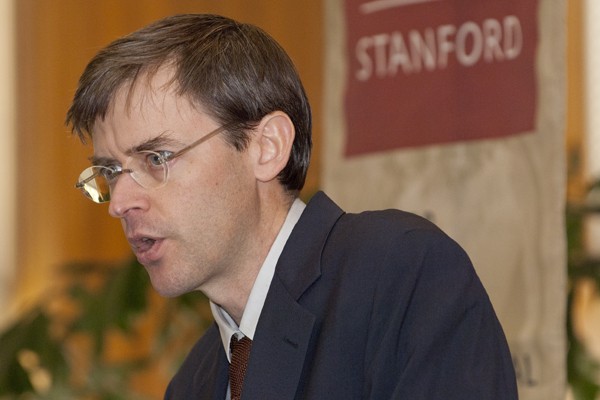
Professor James Fearon
"The usual pattern at this point would be for the rebel coalition, now that the prize that helped unify their efforts has been won, to divide and start fighting for control of it," says political scientist James Fearon. Muammar Gaddafi's days appear to be over after a 42-year dictatorship. "There remains a degree of uncertainty and there are still regime elements who pose a threat," said President Obama earlier today. "But this much is clear: the Gaddafi regime is coming to an end and the future of Libya is in the hands of its people." As events continue to unfold in Tripoli, the world is asking exactly what to expect next in Libya. The Stanford News Service posed the question to James Fearon, a professor of political science whose research focuses on political violence, ethnic conflict and the impact of democracy on foreign policy. Who's the new boss' Which way might this roll' The Transitional National Council. Hopefully they have already agreed on a process for holding initial elections, writing and approving a new constitution, and a transitional authority that would attend to maintaining order.
TO READ THIS ARTICLE, CREATE YOUR ACCOUNT
And extend your reading, free of charge and with no commitment.