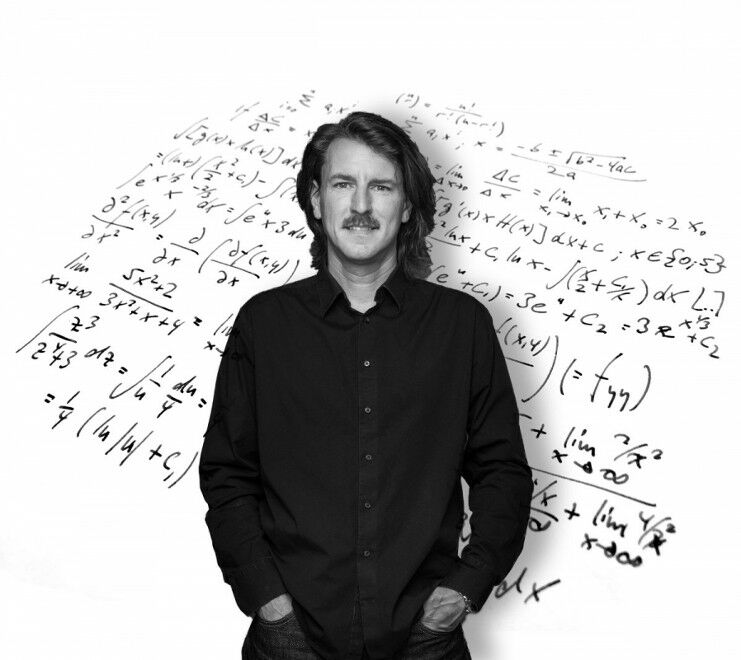
Daniel Mügge, Professor of Political Arithmetic at the University of Amsterdam (photo: JW Kaldenbach / design: Petra Gijzen/Swirl)
Daniel Mügge, Professor of Political Arithmetic at the University of Amsterdam (photo: JW Kaldenbach / design: Petra Gijzen/Swirl) The newspapers are often full of figures that reflect how our economy is doing, for example in terms of unemployment or inflation. 'However, these figures are far from objective', warns political economist Daniel Mügge, who together with his team examined headline economic indicators and the formulas underlying them. Their research exposes the limitations and biases of such data-and the need to understand it better. 'We are not saying that these figures are meaningless. But we do need to become wise to their uses and limitations.' Six years ago, Daniel Mügge, Professor of Political Arithmetic at the University of Amsterdam, started researching economic formulas with his team. Why does this deserve our attention, and what message does Mügge have to share with us? There is a political dimension to economic figures . For Mügge, the interest in economic formulas began with the observation that while figures on national economic performance have an air of solidity and neutrality, there is plenty of leeway in their conceptualization and calculation. 'If you look closely at the economic figures and the formulas that underpin them, you realize that something like unemployment, for example, cannot be measured objectively. Choices are made about what is and what is not heeded in economic measurements. For example: do you include the effect of rising property prices on inflation?
TO READ THIS ARTICLE, CREATE YOUR ACCOUNT
And extend your reading, free of charge and with no commitment.