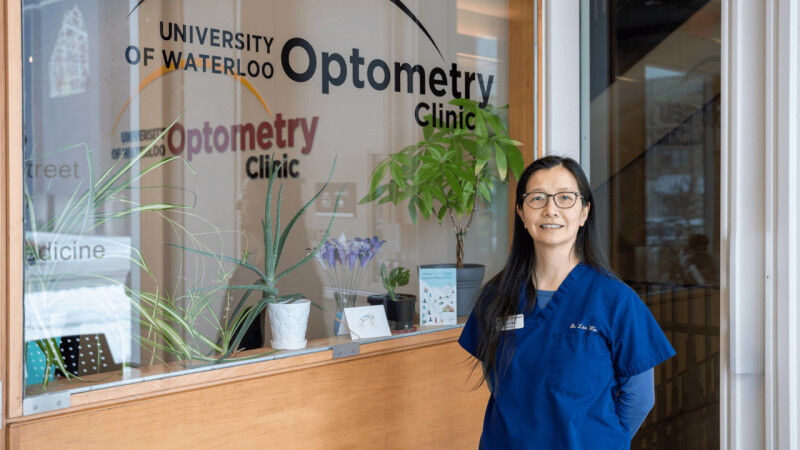
The Waterloo Eye Institute clinic in downtown Kitchener helps ensure that poor vision is one less barrier for those seeking refuge in the community. The School of Optometry & Vision Science has provided eye care to the refugee population for many years, and Dr. Lisa Woo, who became head of the Health Science s’Optometry Clinic eight years ago, continues this commitment, providing care to more than 300 newcomer and refugee patients each year.
The clinic has partnered with local organizations such as Reception House Waterloo Region and Community Healthcaring Kitchener-Waterloo for more than a decade, playing a critical role in helping families integrate into their new lives.
The clinic sees newcomer patients daily, but for the past two years, in partnership with Reception House, it has run a dedicated clinic day each month sp ecifically for refugee patients in the Waterloo Region.
Patients of all’ages receive eye exams, ongoing eye care, and eyeglasse s supported through federal and provincial benefit programs that are now being reduced. "For many of my patients, this is their first eye exam," Woo says.
For Woo, giving back to the community through this service is deeply personal. She arrived in the U.S. as a young refugee from Vietnam and recalls that the journey to her new home was only th e start of a onset of challenges that come with moving your life to a new country.
"Once you’re in a new country, there’s the challenge of learning a new language, and adapting to a new culture and community," she says. "Health concerns make that adjustment even more difficult."
Woo has treated infants and toddler s with congenital eye conditions and eye turns, as well as adults with more complex vision problems due to limited access to care in their home countries. For patients that require tertiary care or surgeries, they are referred to surgeons or speciality care op h thalmologists.
"Eye care shouldn’t be an additional issue that newcomers have to wor ry about," Woo says. " Through providing this service to them, it is assisting them with being successfu l’here in Canada."
Receiving proper eye care can be critical to helping newcomers integrate into their new community. Healthy vision is essential for learning English, finding employment, driving, and contributing to the community. Routine exams also help detect eye diseases and prevent further complications.
Over the next few weeks, the clinic is adding additional days to its schedule to accommodate even more patients prior to government funding changes that will require Interim Federal Health Program beneficiaries to pay 30 per cent of their vision care costs. From now until the changes take effect on May 1, they hope to help as many patients as possible with eye exams and eyewear, knowing the upcoming changes will create new barriers to care.
The clinic will offer additional days for refugees and newcomers on March 30, April 6 and April 13 . learn more about the clinic, .