Lost civilization under Persian Gulf?
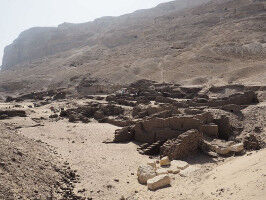
A once fertile landmass now submerged beneath the Persian Gulf may have been home to some of the earliest human populations outside Africa, according to an article in the December issue of Current Anthropology. Jeffrey Rose, an archaeologist and researcher with the University of Birmingham in the U.K., says that this 'Persian Gulf Oasis' may have been host to humans for over 100,000 years before it was swallowed up by the Indian Ocean around 8,000 years ago. Rose's hypothesis introduces a 'new and substantial cast of characters' to the human history of the Near East, and suggests that humans may have established permanent settlements in the region thousands of years before current migration models suppose. In recent years, archaeologists have turned up evidence of a wave of human settlements along the shores of the Gulf dating to about 7,500 years ago. 'Where before there had been but a handful of scattered hunting camps, suddenly, over 60 new archaeological sites appear virtually overnight.' Rose said. 'These settlements boast well-built, permanent stone houses, long-distance trade networks, elaborately decorated pottery, domesticated animals, and even evidence for one of the oldest boats in the world.' But how could such well developed settlements pop up so quickly, with no precursor populations to be found in the archaeological record? Rose believes that evidence of those preceding populations is missing because it's under the Gulf. 'Perhaps it is no coincidence that the founding of such remarkably well developed communities along the shoreline corresponds with the flooding of the Persian Gulf basin around 8,000 years ago,' Rose said.