New MIT analysis on artificial photosynthesis
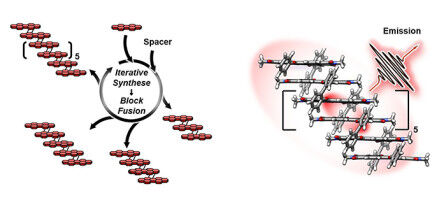
CAMBRIDGE, Mass. A new analysis by MIT researchers could make it possible to design more efficient artificial systems that mimic the way plants harvest the energy of sunlight through photosynthesis. The study is the latest in an ongoing series examining the process of photosynthesis and the different variables that determine its efficiency, conducted by Associate Professor of Chemistry Jianshu Cao and his postdocs and colleagues. The new work, which looks at artificial photosynthetic systems based on self-assembling molecules designed by researchers at of the University of California, Berkeley, follows a paper they published in October in the New Journal of Physics that examined the factors that determine the efficiency of natural photosynthesis. The hope, being pursued by various research teams around the world, is to be able to eventually produce synthetic chemical systems that mimic nature's process of photosynthesis and thereby produce a more efficient way of harnessing the sun's energy than today's photovoltaic panels, and that can be used to produce some kind of fuel that can be stored and used when needed, eliminating the intermittency problems of solar power. Understanding how to maximize the efficiency of the process is one step toward being able to create such a system. The new research, by Cao and postdoctoral fellow Ji-Hyun Kim, found that there are many possible shapes that can be formed by bundles of chromophores - the reaction centers within molecules that actually absorb particles of light from the sun, or that transfer that energy or convert it into chemical forms that can be stored for later use.