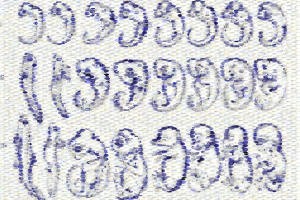
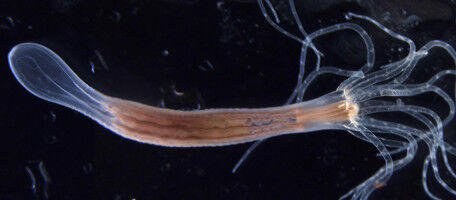
Nature cover by Pavel Tomancak
University of Manchester researchers have played a vital role in an international study that has revived the 200-year-old question: why do different species share similar stages of embryonic development?. Dr Casey Bergman and Dr Dave Gerrard at Manchester's Faculty of Life Sciences collaborated on the project with Pavel Tomancak, at the Max Planck Institute of Molecular Cell Biology and Genetics in Dresden, and Uwe Ohler, at Duke University, on a study funded by the Human Frontiers of Science Program published in Nature today. The team looked at differences in the embryonic development of species in search of what unites animal groups at the level of embryos and their genes, bringing the power of modern molecular techniques to bear on what is a classic problem in biology. It has long been noted that there are striking similarities between the embryonic development of animals and their evolutionary histories. This relationship between how animals develop and deep evolutionary time hints at the existence of profound connections between different animal species and has therefore captured the imagination of both biologists and the wider public. However, ever since the first observations were discussed by leading 19th century biologists, such as von Baer, Darwin, and Haeckel, the existence and meaning of these similarities has been fraught with controversy arising from the subjective nature of the comparisons of different animal forms. While the pioneers of embryology believed that animal species are most similar at the earliest stages of their embryonic development, the arrival of improved observational methods in the 20th century led to a revised proposal.
TO READ THIS ARTICLE, CREATE YOUR ACCOUNT
And extend your reading, free of charge and with no commitment.