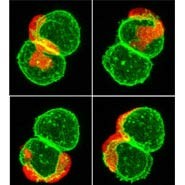
This gives us the first insight into how immune cells sense and then attempt to deal with the earliest stages of cancer. Now we can look closer to figure out why it is that immune cells seem to aid growth of these young cancer cells and figure out ways for guiding immune cells how better to search and destroy.?
The imaging of tumour growth in zebrafish has revealed for the first time how cancer cells have the capacity to co-opt the immune system into spreading disease, leading the way for investigations into potential therapies for eliminating early-stage cancer in humans. Using different coloured fluorescent tags, scientists at the University of Bristol labelled the white blood cells of the translucent zebrafish in order to track the growth of tumours with live images. Studies were carried out using zebrafish because they conserve many of the molecular and cellular components of tumour formation seen in mammals and they are absolutely translucent making it easy to see the cells as they move around and grow. Tests showed that cancer cells are less likely to spread if the white blood cells can be prevented from contacting the precursor cancer cells, suggesting that white blood cells - the immune cells - have the ability to promote disease by providing some kind of growth signal. Interestingly, the chemical compound that acts as a draw between the two sets of cells was shown to be hydrogen peroxide - commonly used as a disinfectant or antiseptic, but also a harmless and natural by-product produced by the body's metabolic process. These dramatic findings, which are the result of a collaboration between academic colleagues in the UK and Italy (Institute of Molecular Oncology, Milan) are reported in the December edition of the prestigious online journal PLoS (Public Library of Science) .
TO READ THIS ARTICLE, CREATE YOUR ACCOUNT
And extend your reading, free of charge and with no commitment.