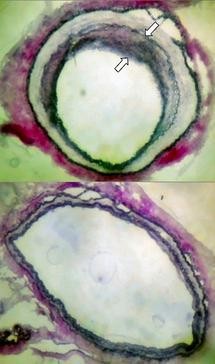
The rejection response (top, arrows) to a transplanted blood vessel in a mouse is prevented by an immune cell therapy (bottom). Image courtesy of Science/AAAS.
A cell therapy that could prevent transplanted organs being rejected, and remove the need for prolonged use of immunosuppressant drugs, has shown promise in early-stage studies in mice. The approach would involve transplant patients being re-injected with their own immune cells after the cells have been isolated from a blood sample. The cells would be grown in the laboratory under conditions that 'teach' the cells not to reject the transplant. The University of Oxford research, funded predominantly by the Wellcome Trust and British Heart Foundation, is published in the journal Science Translational Medicine. The scientists report that their approach using human immune cells can control or prevent rejection of a transplanted piece of blood vessel in a mouse model. 'We have developed a new approach to generate cells called regulatory T cells that can control rejection of transplanted tissue in mice,' says Dr Andrew Bushell of the Nuffield Department of Surgical Sciences at the University of Oxford, who led the work. Transplantation is very effective and saves lives, but patients need to take powerful drugs for the rest of their lives to make sure the donated organ is not rejected by the body's immune system.
TO READ THIS ARTICLE, CREATE YOUR ACCOUNT
And extend your reading, free of charge and with no commitment.