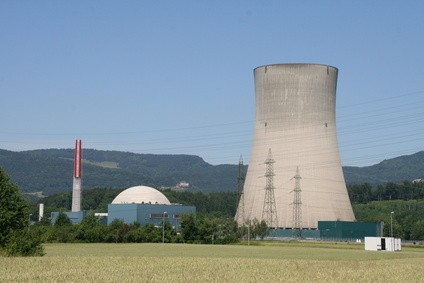
Nuclear power station in Gösgen, Switzerland
If Switzerland does indeed abandon nuclear energy within the time-frame announced by the Swiss Confederation, the question of the burial and disposal of the accumulated waste needs to be addressed. A laboratory has been working on this issue over the last 10 years. Apart from its geo-mechanical expertise, the laboratory creates the materials - and develops the tools for - the verification of systems of multiple barriers, capable of containing the radioactivity for five hundred to a thousand years. To generate electricity, Switzerland has been using nuclear energy for nearly 40 years, and its five nuclear power stations provide about 38% of the electricity required. It's the second most important source of electricity in Switzerland after hydro-electricity. However, the Swiss government recently decided on a gradual phasing-out of atomic energy, and the existing nuclear power stations will be decommissioned over the next twenty years, with the last remaining installation scheduled to be closed down in 2034. The federal law on nuclear energy stipulates that nuclear waste must be managed in Switzerland: more specifically, it states that the waste should be stored in depots located in deep strata, which is considered to be the most appropriate solution for Switzerland. So how should we prepare for the safe and definitive storage of our nuclear waste? For several years, the Laboratory of Soil Mechanics (LMS) has been contributing to research into the identification of the best place for its storage. In parallel, the LMS is also researching into various tools for the evaluation of multi-barrier systems. We asked Professor Lyesse Laloui, the director of the LMS, about the current state of affairs from a scientific and critical viewpoint. How does Switzerland currently handle its nuclear waste?
TO READ THIS ARTICLE, CREATE YOUR ACCOUNT
And extend your reading, free of charge and with no commitment.