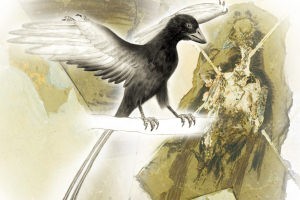
The Confuciusornis sanctus is the oldest beaked bird ever found
An international collaboration led by researchers at The University of Manchester has for the first time revealed chemical traces of pigments in bird, fish and squid fossils, some over 100 million years old. Publishing their findings in Science , the researchers have been able to show a remarkable relationship between copper and pigment within exceptionally preserved feathers and other soft tissues. Results include important species such as the oldest beaked bird yet found, the 120 million year old Confuciusornis sanctus , and also the 110 million year old Gansus yumenensis , which looks similar to the modern Grebe and represents the oldest example of modern birds. Pigment is a critical component of colour. The team can map the presence of pigments over whole fossils, revealing original patterns. The team's findings indicate that pigment chemistry holds the future key to the ultimate goal of discovering the colour palette of past life, from dodos to dinosaurs and beyond. Colour has played a key role in the processes of evolution by natural selection that have steered all life on Earth for hundreds of millions of years.
TO READ THIS ARTICLE, CREATE YOUR ACCOUNT
And extend your reading, free of charge and with no commitment.