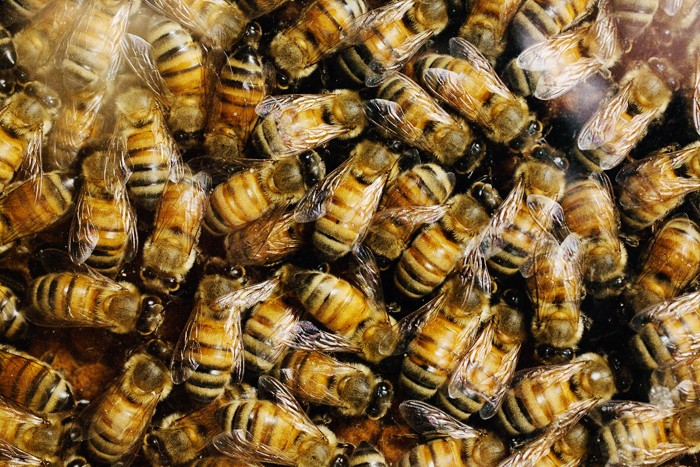
Exposure to naturally occurring defensive compounds in flowers may have allowed honey bees to better tolerate some synthetic pesticides used to kill mites in the hive.
CHAMPAIGN, lll. A new study reveals how enzymes in the honey bee gut detoxify pesticides commonly used to kill mites in the honey bee hive. This is the first study to tease out the precise molecular mechanisms that allow a pollinating insect to tolerate exposure to these potentially deadly compounds. The findings appear in the Proceedings of the National Academy of Sciences. Previous studies have shown that honey bee hives are contaminated with an array of agricultural chemicals, many of which the bees themselves bring back to the hive in the form of contaminated pollen and nectar, said University of Illinois entomology professor and department head May Berenbaum, who led the new research. "There are agricultural pesticides everywhere," she said. "They accumulate in the wax of bee hives, so bees in particular are exposed.
TO READ THIS ARTICLE, CREATE YOUR ACCOUNT
And extend your reading, free of charge and with no commitment.